
Quick Answer
Stop using the wrist, ice it for 15–20 minutes, wrap it snugly (not tightly), and keep it raised above heart level. Rest it for the first 24–48 hours and avoid heavy lifting, twisting, or sports until the pain settles.
A sprained wrist usually happens when you fall on an outstretched hand or twist it suddenly. The ligaments stretch or tear slightly, causing pain, swelling, and stiffness. Most mild sprains improve within days — but only if you rest the wrist early instead of “testing” it again and again.
Step 1: Stop and Protect the Wrist
Stop whatever you were doing at once. Do not keep playing, lifting, or typing through the pain to “see if it gets better.”
- Remove watches, bracelets, or tight sleeves from that wrist — swelling can make them feel tighter within an hour.
- Keep the wrist in a neutral, comfortable position. Do not force it to bend or rotate to check the range of movement.
Step 2: Ice It — The Right Way
Ice helps reduce pain and swelling in the first 24–48 hours.
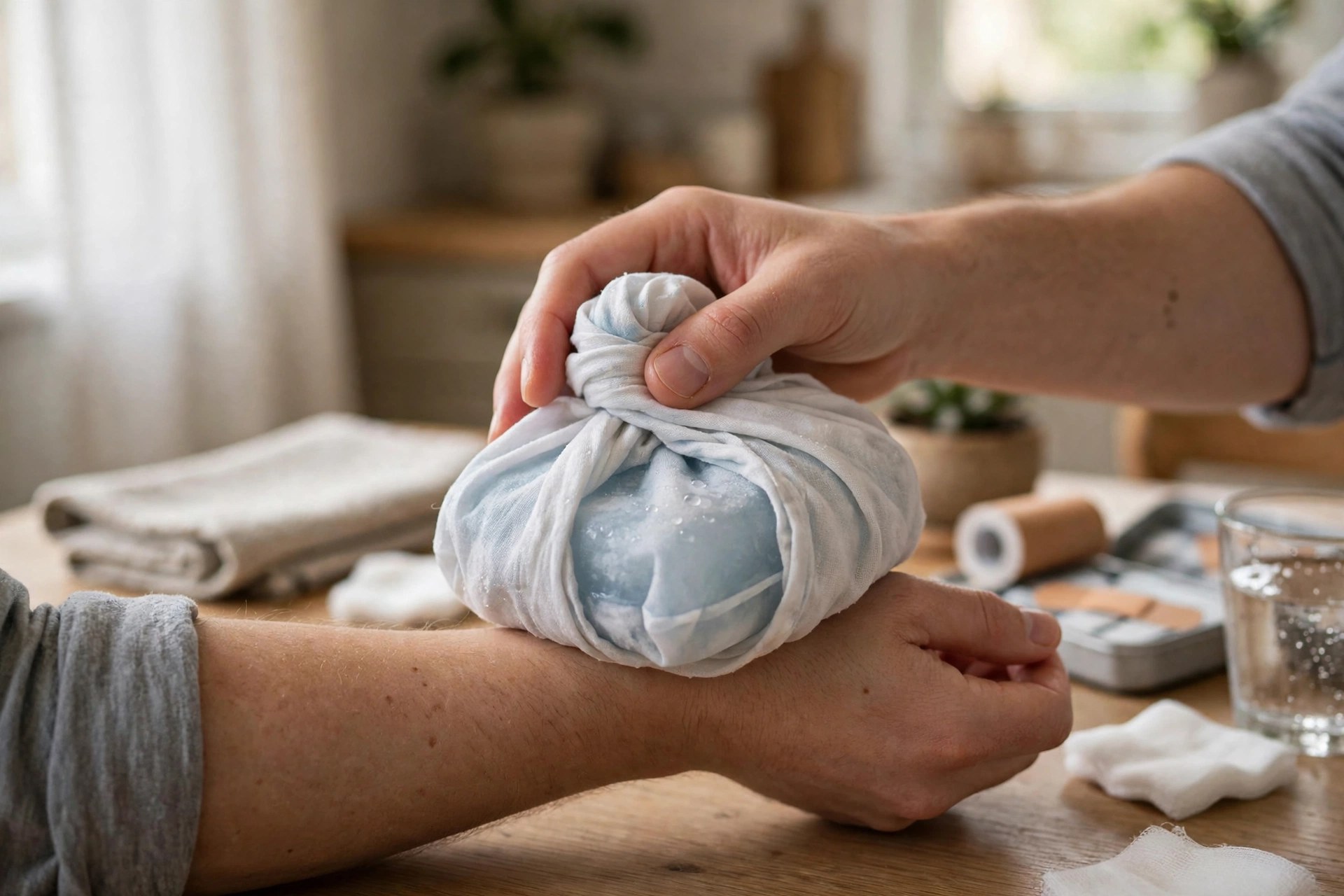
- Wrap an ice pack or a bag of frozen peas in a thin towel. Never place ice directly on bare skin.
- Hold it on the painful area for 15–20 minutes.
- Repeat every 2–3 hours during the first day, if the wrist still hurts or looks swollen.
- Remove the ice early if the skin becomes very numb or painfully cold.
Step 3: Wrap It Snugly — Not Tightly
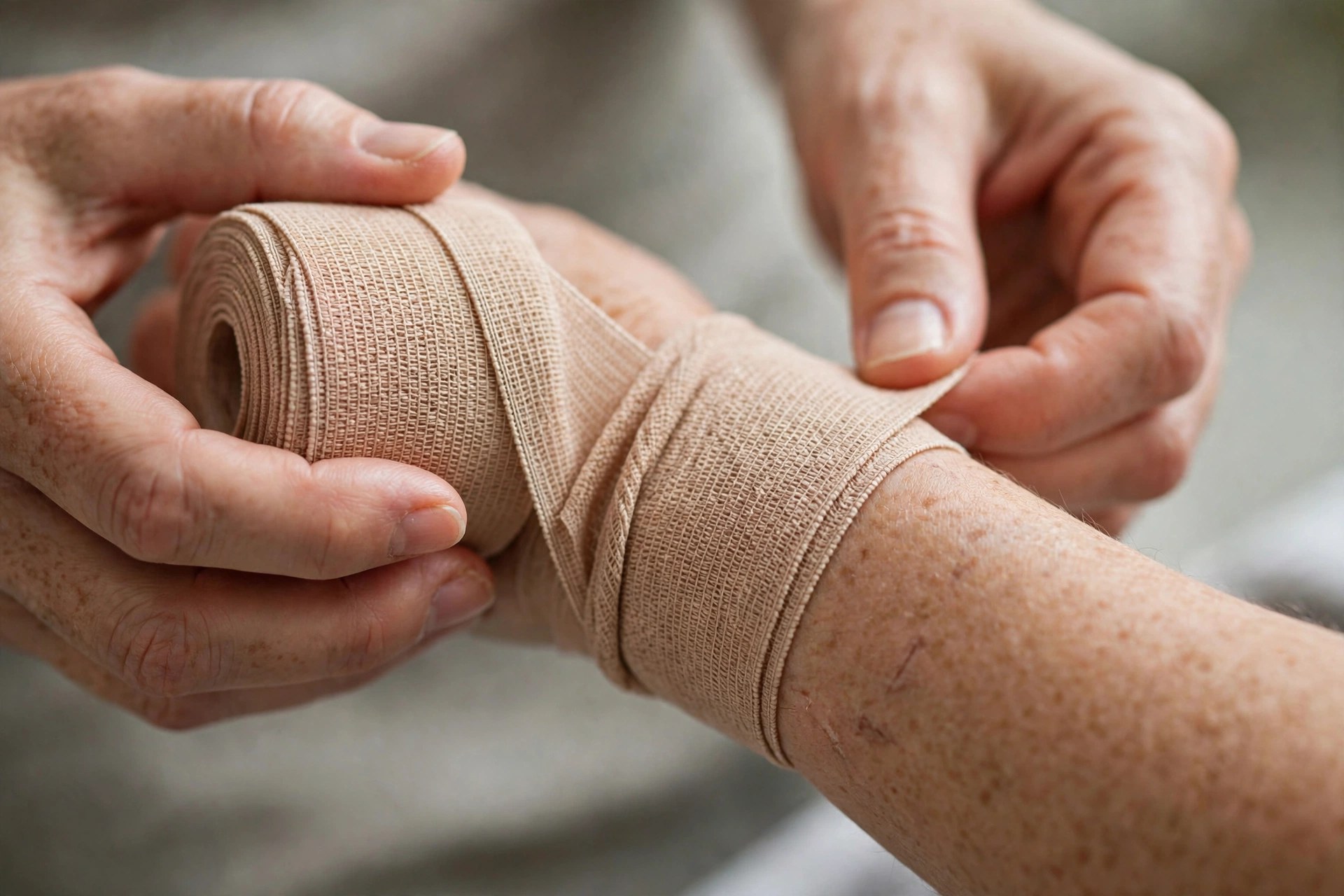
A light elastic bandage gives support.
- Start wrapping from the hand side, just below the knuckles, and work up past the wrist.
- Overlap each turn by about half the bandage width.
- The wrap should feel supportive, not tight. You should be able to move your fingers freely.
- If your fingers tingle, go numb, turn blue or very pale, or feel colder than the other hand, loosen the bandage at once and rewrap more loosely.
- Remove the bandage at night unless a doctor has told you to keep it on.
Step 4: Raise It and Rest It
Elevation reduces throbbing and swelling.
- Rest the wrist on a pillow so it sits higher than your heart, especially in the first few hours and while sleeping.
- Avoid carrying bags, opening tight jars, doing push-ups, or lifting weights with that hand.
- Gentle finger movements — opening and closing your hand slowly a few times an hour — help prevent stiffness, as long as they do not hurt.
- For pain, a standard over-the-counter pain reliever may help; follow the pack directions and avoid it if you have a reason not to take it (for example, stomach, kidney, or allergy problems, or if you take blood thinners — ask a pharmacist or doctor first).

Step 5: Watch It Over the Next 48 Hours
Most mild wrist sprains follow this pattern:
- Day 1: Pain and swelling are at their worst. Rest, ice, and elevation matter most.
- Day 2–3: Swelling should start to come down. Gentle movement should feel a little easier.
- Day 4–7: Most daily tasks become comfortable again, though heavy or twisting movements may still hurt.
If pain is not easing after 2–3 days, get the wrist checked. A fracture can feel very similar to a sprain at first.
What NOT to Do
- Do not apply heat (hot water bottle, heating pad, hot shower on the wrist) in the first 48 hours — heat can increase swelling.
- Do not massage the painful wrist hard or try to “crack” or forcefully twist it back into place.
- Do not wrap the bandage so tightly that your fingers tingle or change colour.
- Do not keep playing a sport or lifting weights “through the pain” — this can turn a mild sprain into a longer injury.
- Do not ignore a wrist that looks deformed, or one you cannot move at all.
See a Doctor / Seek Urgent Care If:
- The wrist looks bent, deformed, or out of shape.
- You cannot move the wrist or fingers at all, or the pain is severe even at rest.
- There is numbness, tingling, or weakness in the hand or fingers that does not go away after loosening the bandage.
- The fingers turn blue, very pale, or cold.
- Swelling and pain are not improving after 2–3 days, or they keep getting worse.
- You heard a snap or pop at the time of injury, or the wrist swells very rapidly.
- You take blood thinners, have diabetes or poor circulation, or the injury happened in a child whose bones are still growing.
FAQs
How long does a sprained wrist take to heal?
Mild sprains usually feel much better within a few days and mostly heal in 1–2 weeks. More painful sprains can take 3–6 weeks. If it is still very painful after a week, get it examined.
Should I use ice or heat for a sprained wrist?
Ice for the first 24–48 hours, to control pain and swelling. After the swelling has settled, gentle warmth can feel soothing — but do not use heat on a freshly swollen wrist.
Do I need a wrist brace or splint?
A soft elastic wrap or a simple wrist support is enough for most mild sprains. If pain is strong, or you cannot use the hand, a doctor may advise a splint and an X-ray to rule out a fracture.
This guide is for information only and is not medical advice.