
Quick answer: Don’t stop brushing. Rinse gently, switch to a soft brush and light pressure, clean between your teeth, and watch it for a week — bleeding that is new, light, and painless usually settles as your gum care improves.
Seeing pink in the sink can be alarming, but bleeding gums when you brush are very common — and usually a sign your gums need gentler, more consistent care, not that you should avoid brushing. Skipping brushing lets plaque build up along the gum line, which irritates the gums further. The goal right now is simple: calm the gums, remove plaque gently, and give them a few days to recover.

Do This Right Now
Step 1: Stay calm and rinse gently. Spit out the toothpaste, then rinse your mouth with plain lukewarm water. Don’t rinse hard or swish aggressively — a gentle rinse clears blood and toothpaste without disturbing the gum line further. If the bleeding is light, it should slow down within a few minutes.
Step 2: Rinse with warm salt water. Stir about half a teaspoon of salt into a glass of warm water and swish gently for 20–30 seconds, then spit it out. Do this once or twice a day for a few days. Salt water is soothing and helps keep the area clean while your gums recover. Don’t swallow it.
Step 3: Switch to a soft-bristled brush. If you use a medium or hard brush, change to a soft one today. Hard bristles scrub the gums raw and are a common cause of bleeding. Replace your brush if the bristles are bent, splayed, or more than three months old.
Step 4: Brush gently, at an angle. Hold the brush at roughly 45 degrees to the gum line and use small, light, circular strokes. Let the bristles do the work — pressing hard does not clean better, it only injures the gums. Brush for two minutes, twice a day, covering the outer, inner, and chewing surfaces.

Step 5: Clean between your teeth — gently. Plaque between teeth is a top trigger for gum bleeding, and a brush alone cannot reach it. Slide floss or an interdental brush gently between the teeth, curve it around each tooth, and move it up and down — never snap it down hard onto the gum. If you are new to flossing, a little bleeding at first is common and usually fades within a week as the gums get healthier.
Step 6: Don’t skip tonight’s brush. Even if you saw blood this morning, brush again tonight — gently. Consistency is what breaks the cycle: plaque removed daily gives the gums a chance to heal. If a particular spot is sore, brush around it lightly rather than avoiding that whole area.
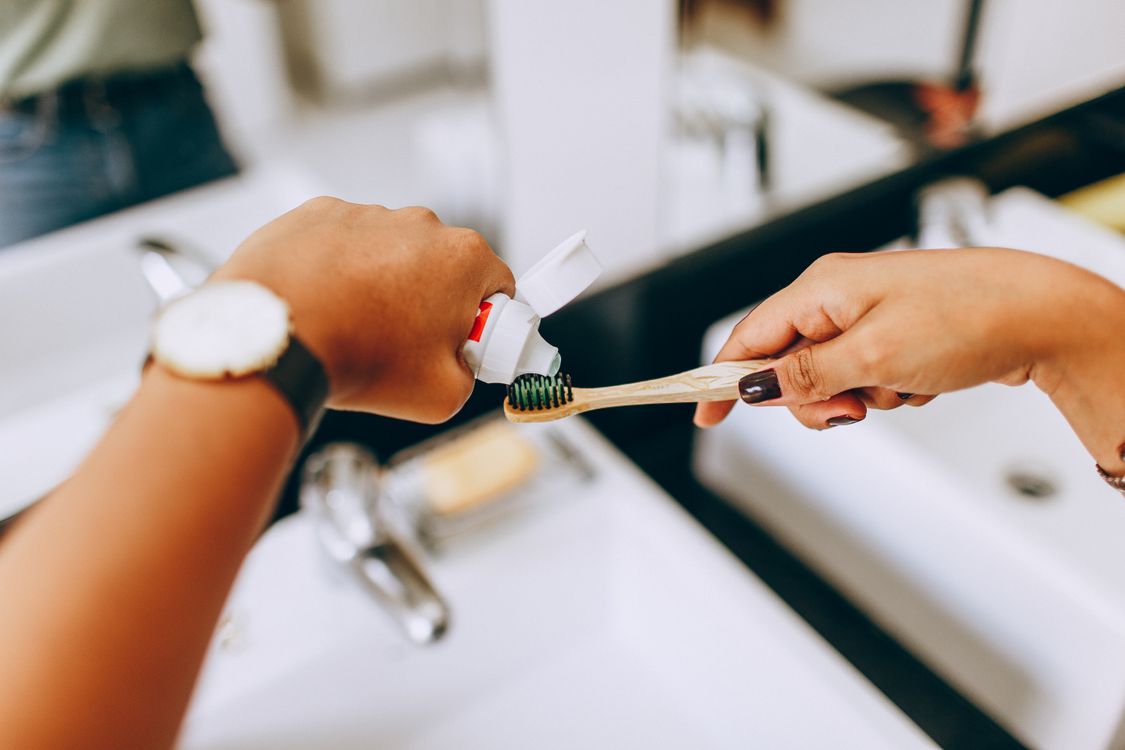
Step 7: Keep a simple one-week watch. Note whether the bleeding is getting lighter each day. Healthy gums usually improve noticeably within 7–10 days of gentle, twice-daily brushing and daily cleaning between teeth. If it is steadily improving, just keep going — and mention it at your next routine dental check-up.
What NOT to Do
- Don’t stop brushing or flossing because you see blood — that lets plaque build up and makes bleeding worse.
- Don’t brush harder to “scrub the bleeding away” — hard pressure injures gums and can wear the gum line back over time.
- Don’t use a hard-bristled brush or an old brush with splayed bristles.
- Don’t rinse with strong antiseptic mouthwash all day — follow pack directions, and don’t use it as a substitute for brushing.
- Don’t start antibiotics or medicated gels on your own — these need a dentist’s advice.
- Don’t ignore bleeding that keeps coming back — persistent bleeding is a reason to see a dentist, not something to live with.
See a Dentist / Seek Urgent Care If:
- The bleeding is heavy, or it doesn’t stop after 10–15 minutes of gentle pressure and rinsing.
- Your gums bleed every day for more than 1–2 weeks despite gentle brushing and flossing.
- Your gums are swollen, painful, or pulling away from the teeth, or a tooth feels loose.
- You have a fever, a bad taste, pus, or swelling in the face or jaw along with the bleeding.
- You take blood-thinning medicine, or you have a condition that affects blood clotting — mention this to your dentist promptly.
- The bleeding started after a dental procedure, an injury, or a new medicine.
FAQs
Is it normal for gums to bleed when I start flossing?
Yes, mild bleeding is common in the first few days, especially if you haven’t flossed regularly. It usually settles within a week as plaque is removed and the gums get healthier. If it doesn’t improve, see a dentist.
Should I use mouthwash for bleeding gums?
A standard mouthwash can freshen breath, but it doesn’t replace brushing and cleaning between teeth. If you use one, follow the pack directions and don’t overuse it. A warm salt-water rinse is a simple, gentle option for a few days.
Can vitamin deficiency cause bleeding gums?
Severe vitamin C deficiency can affect gum health, but plaque build-up is a far more common cause. A balanced diet helps overall gum health, but don’t self-diagnose a deficiency — if bleeding persists, a dentist can check what’s really going on.
This guide is for information only and is not medical advice.