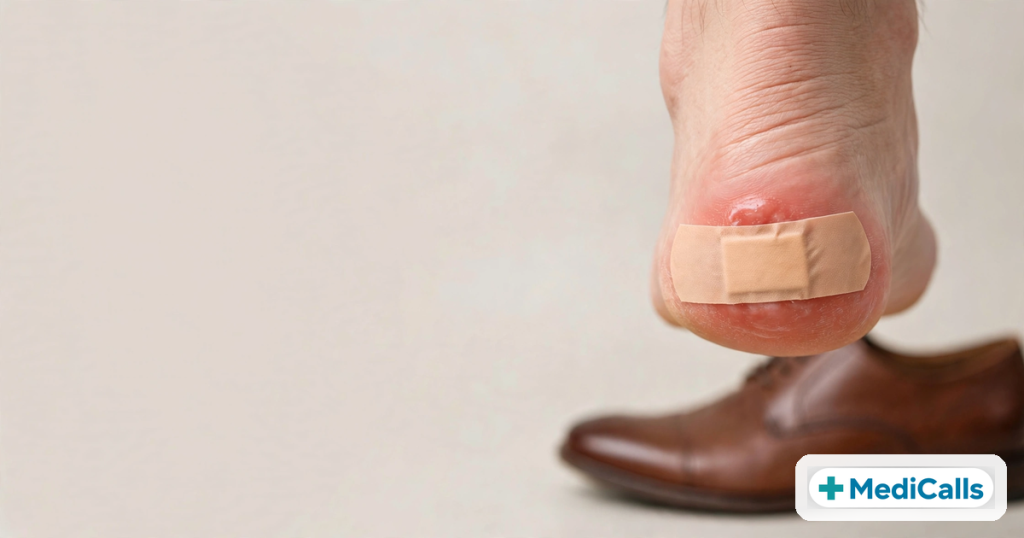
QUICK ANSWER: Stop walking in the biting shoe, clean the sore gently, cover it with a cushioned blister plaster, and give it a few days of air and rest. Do not pop the blister and do not keep wearing the same shoe on the raw spot.
A shoe bite happens when a stiff shoe edge rubs the same spot on your heel again and again — first a hot, red patch, then a painful blister. Keep walking in the same shoe and it tears open, turning a simple sore into an infected wound. The first 10 minutes of care decide most of the outcome.
Step 1: Take the shoe off — right now
The moment you feel burning or pinching, stop. Walking “just a little more” turns a red patch into a blister and a blister into an open wound. Switch to sandals, or loosen the laces and fold the heel collar down so it no longer rubs the sore. If you must keep walking, slip a folded tissue between shoe and heel as a temporary cushion only.
Step 2: Clean it gently
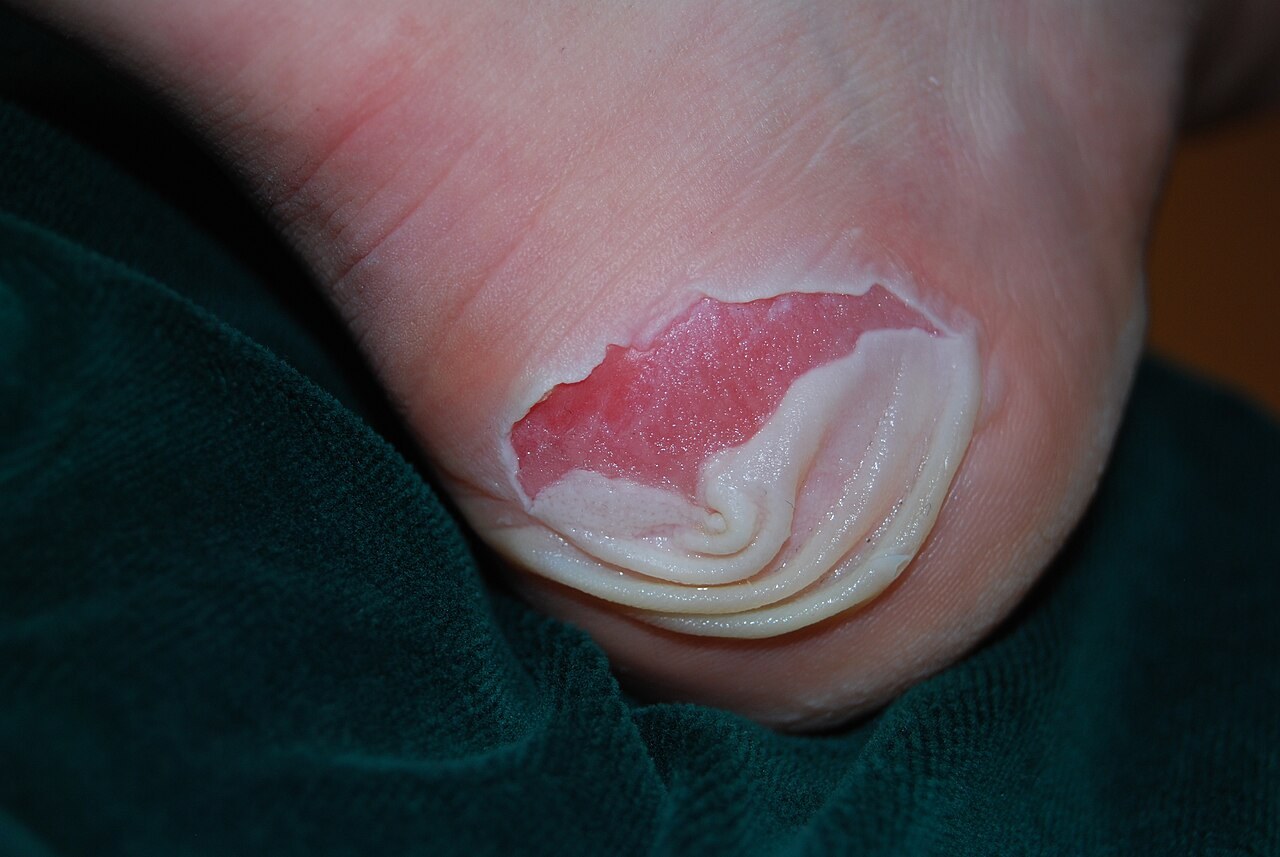
Wash your hands, then wash the sore with lukewarm water and mild soap. Pat dry — do not rub, as rubbing can tear fragile blister skin. If the skin is only red and unbroken, that is enough. If the blister has burst, rinse away fluid but leave the loose skin flap in place: it is your body’s natural bandage.
Step 3: Cover it with the right plaster
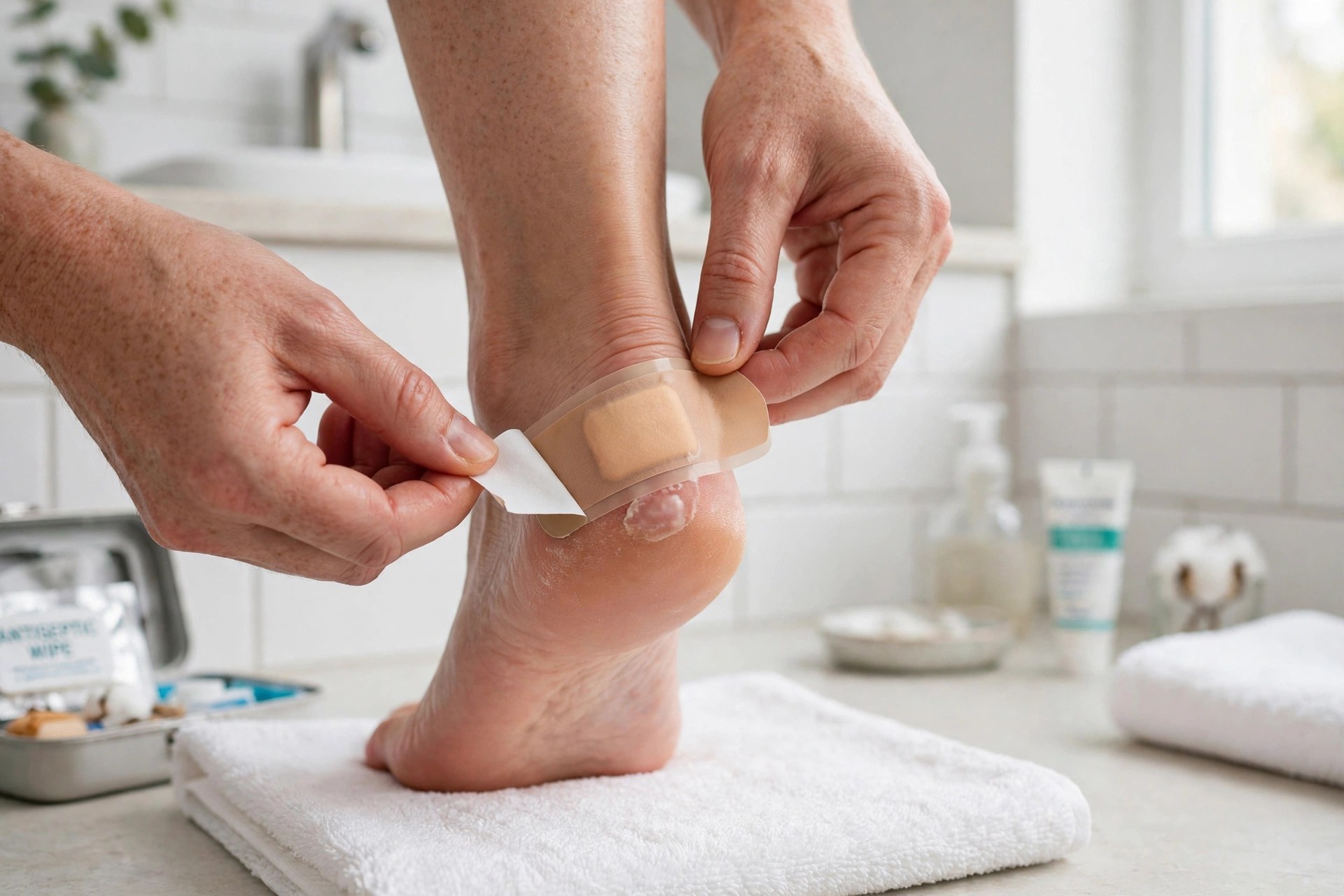
For a red patch with no blister, a moleskin pad or thick cushioned plaster stops further friction. For an intact blister, use a hydrocolloid blister plaster if you have one — it cushions, keeps the area clean, and stays on for days. A regular bandage works too, but change it daily. The plaster should be bigger than the sore, with sticky edges on healthy skin.
Step 4: Let it breathe at night
At home, take the plaster off and let the sore air out for a few hours, especially overnight. Put a fresh plaster on in the morning; a loose clean sock protects it from the bedsheet.
Step 5: Protect it for the next few days
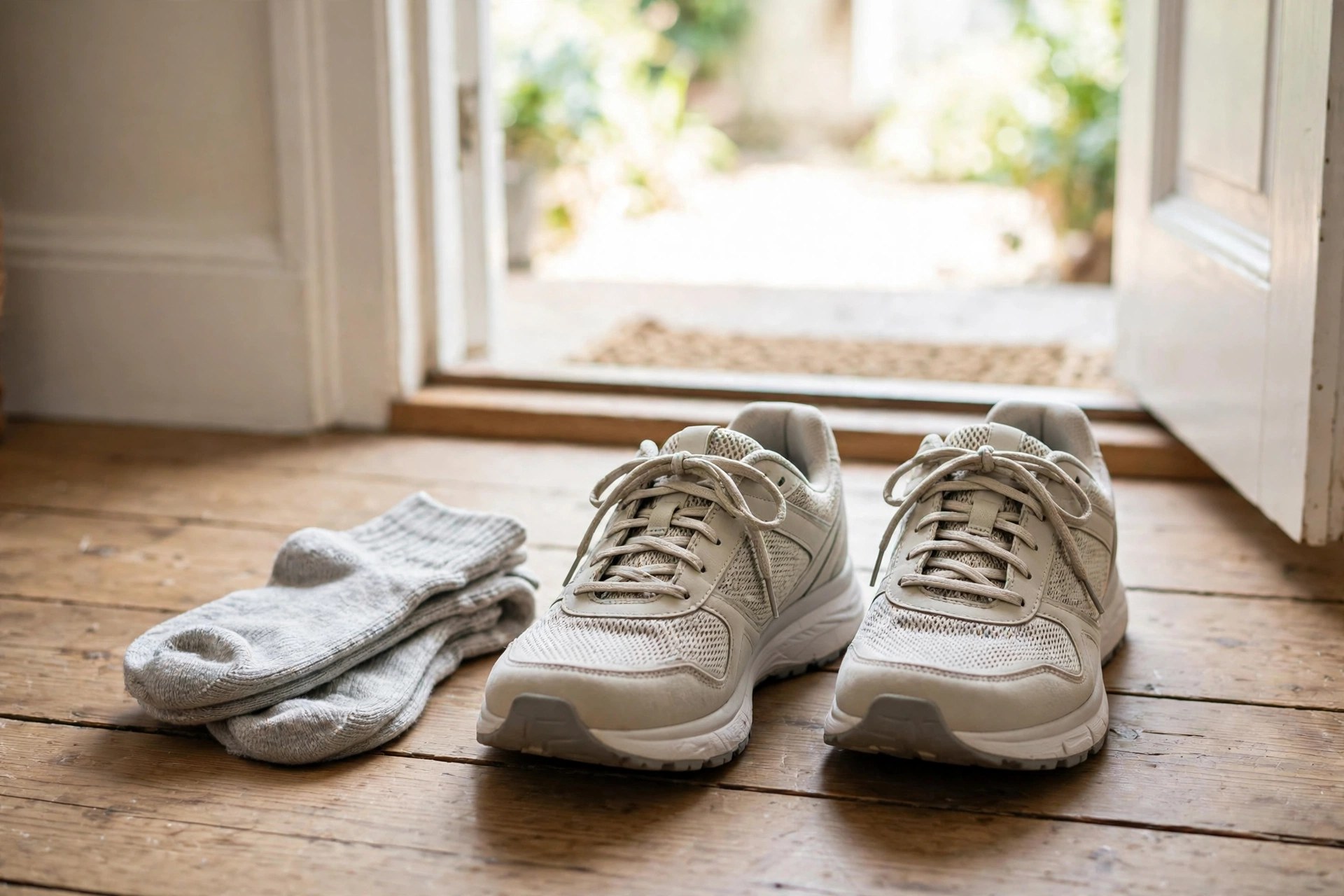
Do not wear the biting shoe again until the skin has closed — usually 3–5 days for a blister, faster for a red patch. Wear soft, well-fitting footwear with socks that do not bunch at the heel. If you must wear the same shoes for work, stick a moleskin pad inside at the rubbing point and check the sore at lunchtime. Any return of burning means the shoe is still rubbing — change shoes, not plasters.
Step 6: Break new shoes in slowly
New shoes cause most shoe bites. Wear a new pair for just an hour or two indoors first, then increase the time over several days. Put heel grips or moleskin on known hot spots before the first long walk, not after the blister appears. Shoes that still bite after a week of breaking in probably do not fit your foot — no plaster fixes a wrong fit.
What NOT to do
- Do not pop the blister. Popping opens the door to infection and usually slows healing.
- Do not peel off the blister skin, even if it looks loose. Leave it as a natural cover.
- Do not apply toothpaste or antiseptic cream on an open blister unless a doctor advises it — they irritate raw skin.
- Do not keep wearing the same shoe on the sore “to get used to it.” Pain means stop, not push through.
- Do not wrap the foot tightly. A tight wrap cuts circulation and worsens swelling.
- Do not ignore spreading redness, warmth, pus, or a bad smell — they may mean infection.
See a doctor / seek urgent care if:
- Redness, warmth, swelling, or pain increases after 2 days instead of improving.
- You see pus, yellow crusting, red streaks, or a bad smell.
- You develop a fever or the pain becomes severe.
- The blister is very large, bloody, or keeps refilling.
- You have diabetes, poor circulation, or a weak immune system — foot wounds need earlier attention in these cases.
- The sore has not improved after a week of proper care.
FAQs
How long does a shoe bite take to heal?
A red patch settles in 1–2 days, an intact blister in 3–5 days, a burst blister in up to a week. Keeping friction off speeds healing most.
Should I pop a shoe-bite blister if it is very painful?
Try not to. Popping raises infection risk. Cushion it well, rest the foot, and take a standard over-the-counter pain reliever if needed, following the pack directions. If pain is severe or the blister is huge, let a doctor or pharmacist look at it.
Can I wear the same shoes again once it heals?
Yes, if they fit well and the bite was just from stiffness or a long first walk. Break them in gradually and use heel grips. If the same shoe bites the same spot repeatedly, the fit is wrong — replace it.
This guide is for information only and is not medical advice.