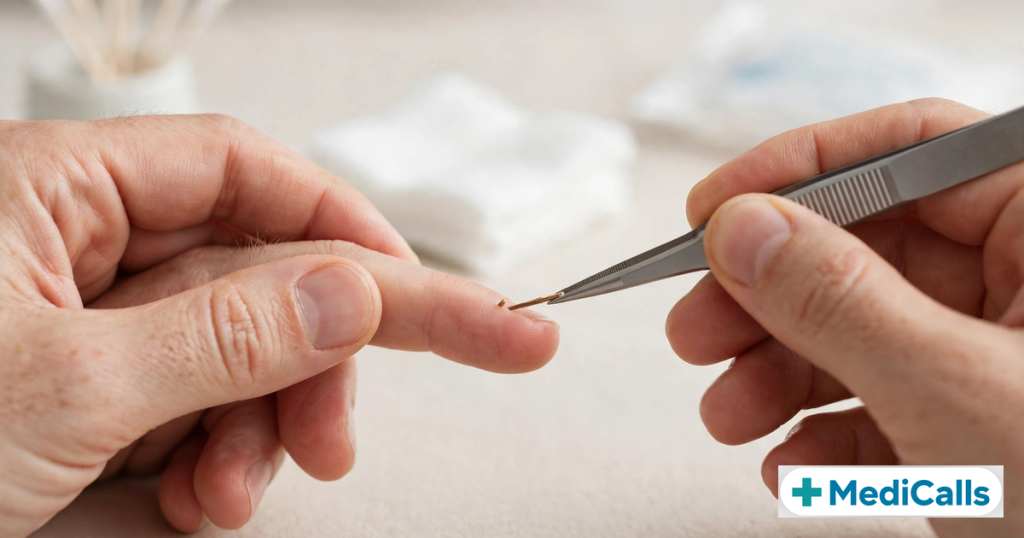
QUICK ANSWER: A splinter is a tiny sliver of wood, glass, or thorn stuck in your skin. Wash the area, pull it out with clean tweezers along the angle it entered, clean the wound with soap and water, and cover it. Get help if you cannot see it or reach it, or if the area turns red and swollen.
It happens in a second — you brush against a wooden railing, handle rough firewood, or walk barefoot on a deck, and now there’s a sharp sting in your finger or foot. A splinter isn’t dangerous by itself, but leaving it in lets germs settle in and can turn into a painful infection. Here’s exactly what to do, right now.
What you need
- Clean tweezers (fine-tipped are best)
- Soap and clean running water
- A clean needle (only if the splinter is fully under the skin)
- Antiseptic lotion or cream
- A small adhesive bandage
Step 1: Wash your hands and the area
Before you touch the splinter, wash your hands well with soap and running water. Then gently wash the skin around the splinter with soap and lukewarm water. Clean hands mean you won’t push germs into the wound while working.

Step 2: Look at it under good light
Get under a bright light — a phone torch works fine. If you wear reading glasses, put them on. Look for which way the splinter went in. You will pull it back out along the same angle it entered; that is the golden rule of splinter removal.
Step 3: Sterilise the tweezers
Wipe the tips of the tweezers with rubbing alcohol or spirit, or dip them in hot (not scalding) water for a minute. This takes seconds and cuts the infection risk sharply.
Step 4: Grip and pull at the entry angle
Firmly grip the visible end of the splinter with the tweezers and pull it out slowly along the exact angle it went in. Do not rush or yank — a slow, steady pull breaks the splinter less often. If the splinter is very small and barely sticks out, use the sterilised needle to gently lift the skin flap over it and expose the end, then grab it with tweezers.

Step 5: Clean the wound and cover it
Once the splinter is out, squeeze the area gently to let a little blood or fluid push out any remaining dirt. Wash again with soap and water, apply a thin layer of antiseptic cream, and cover with a clean adhesive bandage. Change the bandage once a day and keep the area dry for a day or two.

Step 6: Watch it for 2 days
A little soreness for a few hours is normal. Check the spot once a day. As long as the redness and tenderness keep fading, you did everything right and the skin will heal on its own.
What NOT to do
- Do not dig at it with dirty fingernails or an unsterilised pin — you will push germs in.
- Do not squeeze hard or crush the skin around it; deep splinters can break into smaller pieces that are much harder to remove.
- Do not ignore a splinter under a fingernail or deep in the foot — these are the most likely to get infected.
- Do not try to suck the splinter out; it doesn’t work and adds bacteria.
See a doctor / seek urgent care if:
- You can’t see or reach the splinter, or it breaks and a piece stays in.
- The area becomes redder, more swollen, or warmer over the next day — or red streaks spread from it.
- You feel throbbing pain, pus appears, or you develop a fever.
- The splinter is in the eye, face, or under a fingernail where you can’t remove it safely.
- Your tetanus vaccination is not up to date and the object was dirty or rusty.
Quick FAQs
Can a splinter come out on its own?
Sometimes tiny surface splinters work their way out in a few days. But don’t wait on a painful or visible one — removing it now prevents infection.
The end broke off inside. What now?
If you can’t grip what’s left, soak the area in warm water for 10–15 minutes to soften the skin and try again. If it still won’t come, see a doctor rather than digging deeper.
Is baking soda paste a good idea?
A warm soak is more effective and safer. Skip home-paste remedies that keep the wound damp for hours — moisture invites infection.
This guide is for information only and is not medical advice.