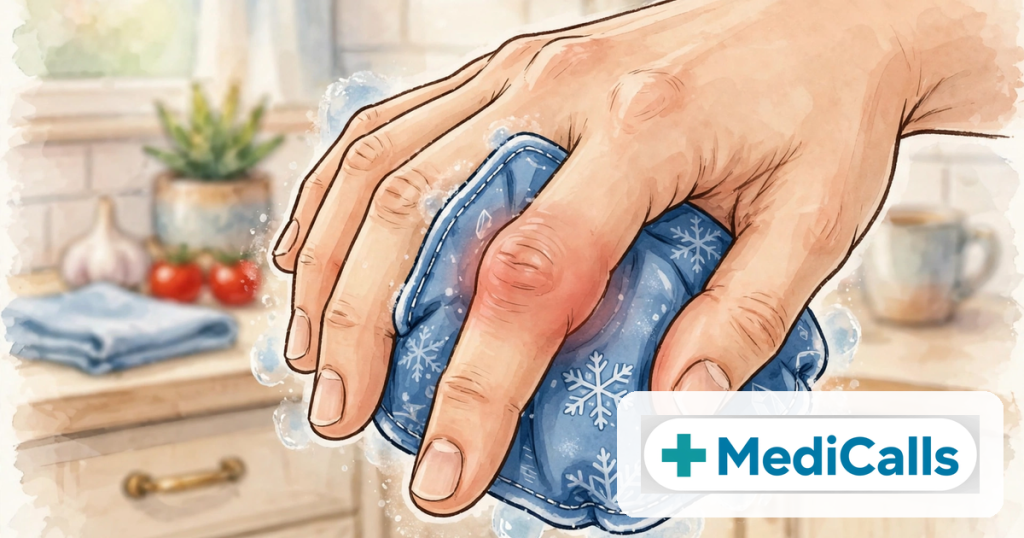
QUICK ANSWER: Stop using the finger, take any rings off, ice it through a cloth for 15 minutes, and tape it loosely to the neighbouring finger (buddy taping). Most jammed fingers feel much better in a few days. Never force a bent or crooked finger straight — that can make a fracture or dislocation worse.
What just happened to your finger
A jammed finger happens when the fingertip takes a hard, straight-on hit — a door slamming on it, a ball smacking the tip in cricket or basketball, a fall where your hand hits the ground first. The impact compresses the joint, and the joint’s ligaments and the bone near it take the blow. The result is the familiar trio: sharp pain, rapid swelling, and a finger that refuses to bend.
A classic jam is just a sprained joint and heals with home care. But the same injury can also hide a small fracture or a dislocated joint, so the first minute matters — mostly for what you don’t do.
Do this right now — step by step
Step 1: Stop, look, and take rings off
Stop using that hand immediately. Look at the finger from the side: does it look crooked, bent at an odd angle, or shifted out of line? Gently touch the fingertip — can you feel it, or is it numb? If anything looks deformed or feels numb, keep the finger still and see a doctor (see below). Right now, before swelling starts, slide off any rings on that finger. A swollen finger can trap a ring in an hour.
Step 2: Ice it — through a cloth, 15 minutes
Wrap a handful of ice cubes or a frozen peas bag in a thin towel and hold it on the sore joint for 15 minutes. Never press ice directly on the skin — it can burn it. Repeat every couple of hours for the first day or two. The cold slows down the swelling that makes every bend hurt.
Step 3: Rest it and keep it up
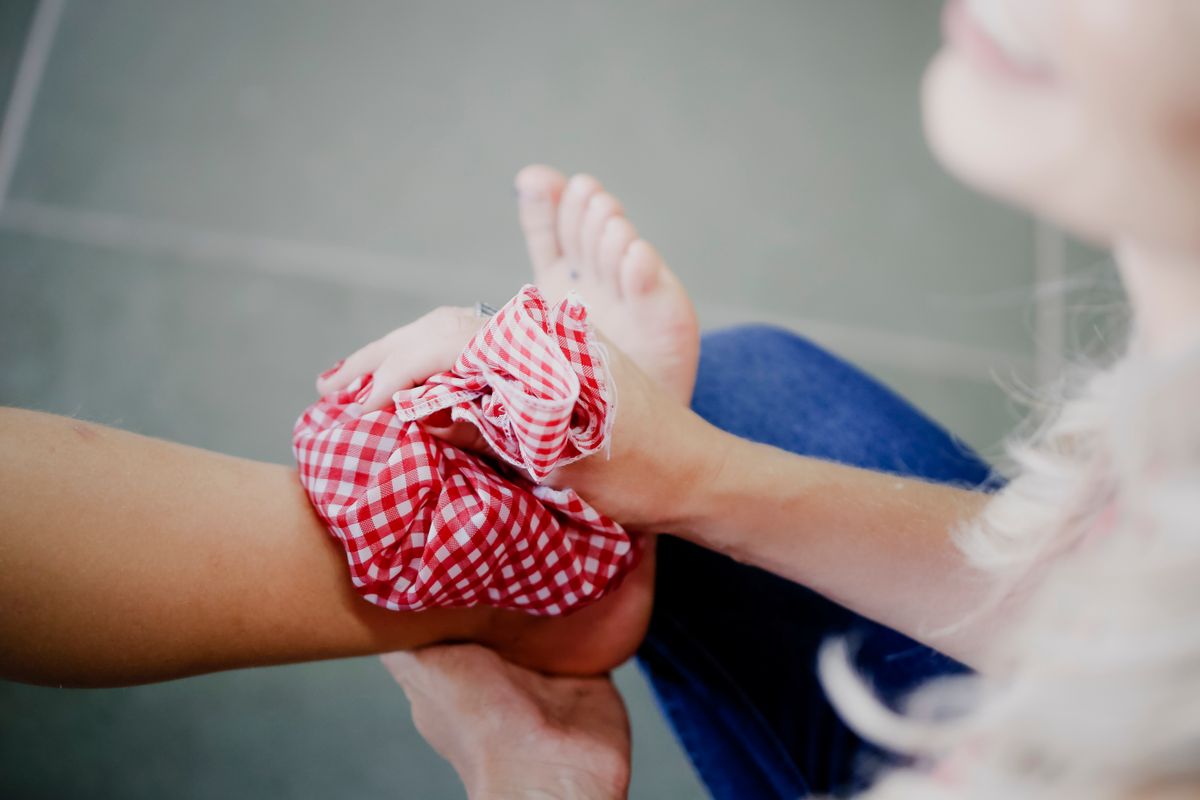
Don’t try to “test” the finger by bending it repeatedly — you’ll only irritate the joint. Rest it from gripping, typing-heavy work, and sport. Whenever you can, keep the hand raised above heart level (prop it on a cushion), which helps drain the swelling.
Step 4: Buddy-tape it after the first day
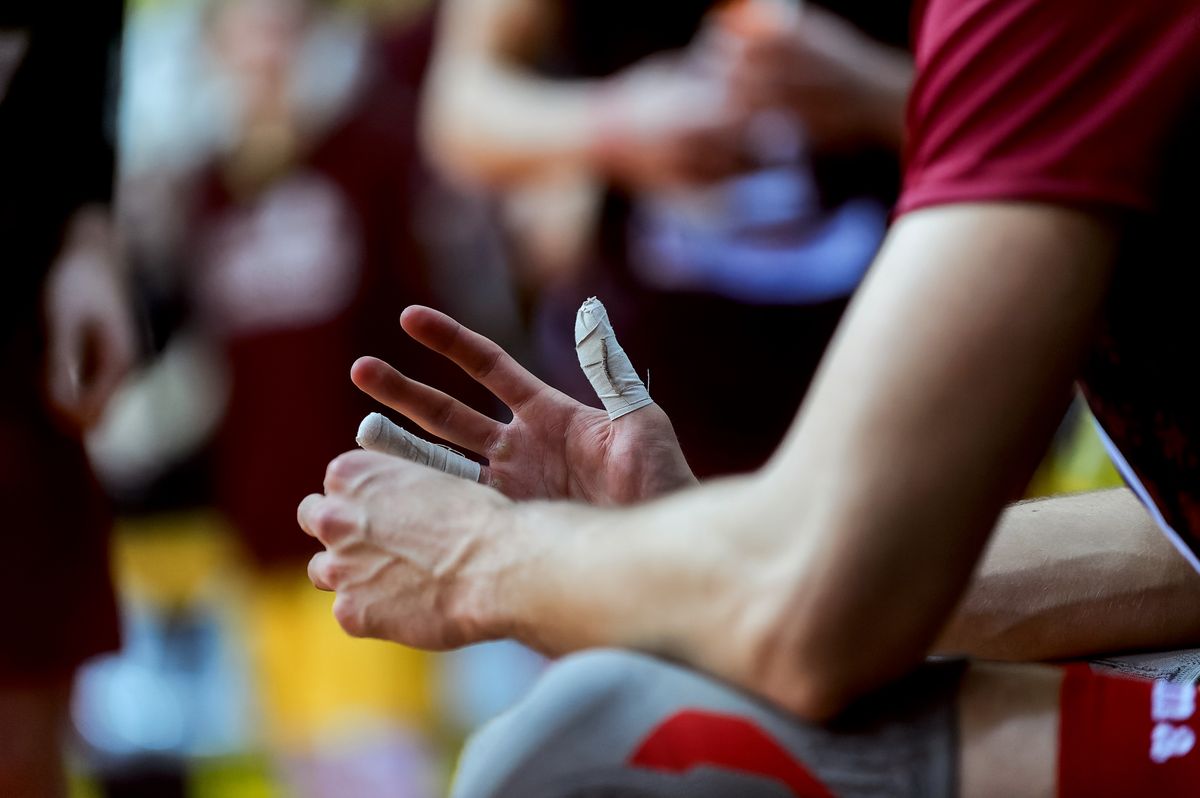
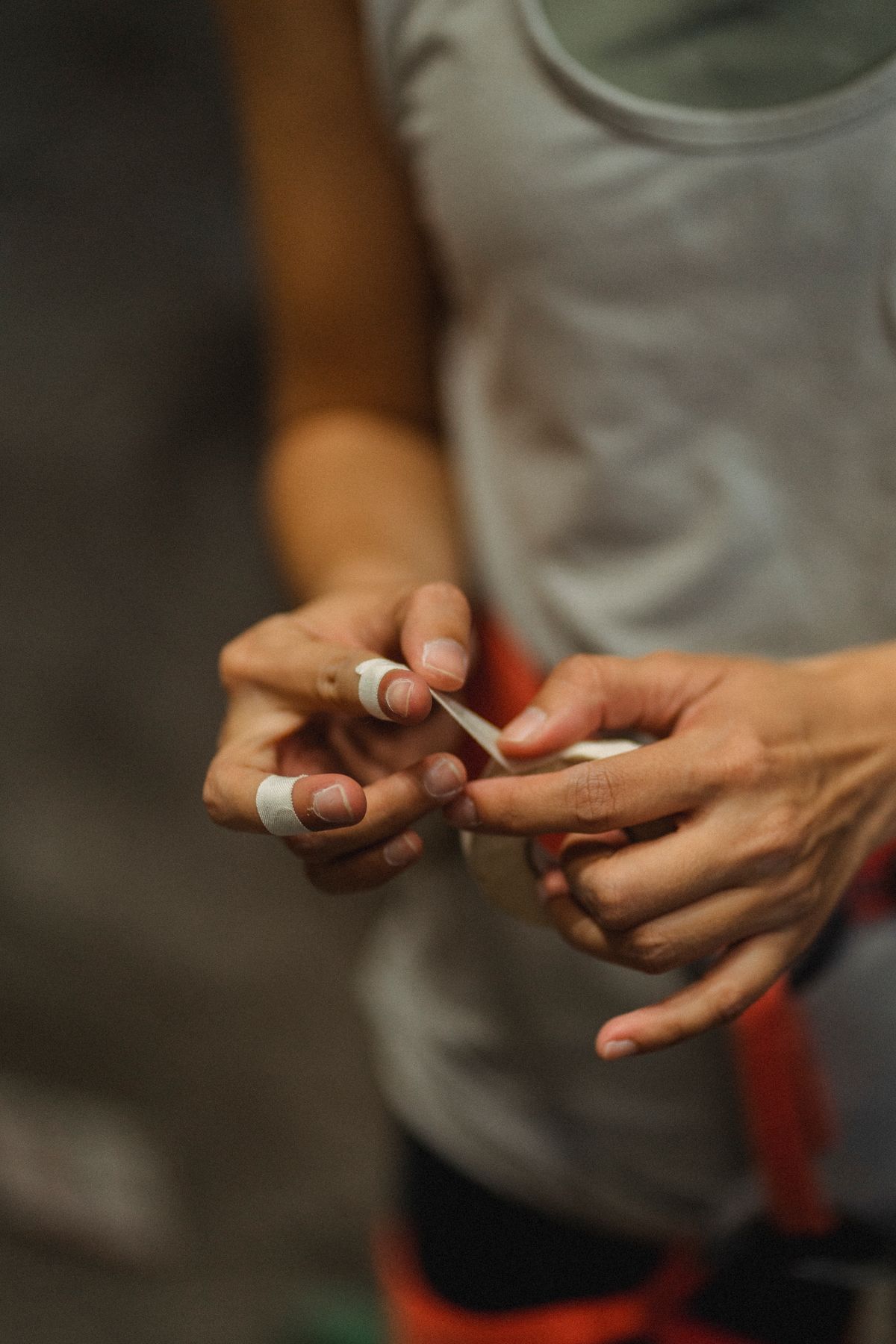
Once the swelling settles a little (usually after 24 hours), tape the sore finger loosely to the healthy finger next to it — a technique doctors call buddy taping. Put a small piece of cotton or gauze between the fingers first so the skin can breathe, then wrap two or three short strips of medical tape around both fingers: one above the sore joint, one below it. The tape should feel supportive, not tight — you should still see normal colour in both fingertips.
Step 5: Ease back into movement after 48 hours
After about two days, start gentle bending and straightening exercises — slow, pain-free movements, a few times a day. Stiff fingers recover faster with gentle motion than with complete rest. A standard over-the-counter pain reliever can help with pain and swelling in the first days — follow the pack directions.
What NOT to do
- Don’t pull the finger straight or try to “pop” it back. If the joint is dislocated or cracked, yanking can damage nerves, tendons, and blood vessels. A crooked finger is a doctor’s job.
- Don’t apply heat in the first 48 hours. Heat increases blood flow and makes swelling worse. Cold first, gentle warmth only days later for stiffness.
- Don’t tape it too tight. Tight tape cuts off circulation. If a fingertip looks pale, blue, or tingly, loosen the tape immediately.
- Don’t keep playing on it. One more hit on an already injured joint is how a simple jam turns into a fracture that needs weeks of treatment.
See a doctor / seek urgent care if:
- The finger looks bent, crooked, or dislocated — don’t wait.
- The fingertip is numb, tingly, or won’t stop throbbing after icing.
- The finger is so swollen you can’t bend it at all after 2–3 days.
- Pain gets worse instead of better after a few days.
- You heard a snap at the moment of injury, or the pain came from a heavy crush (car door, heavy object) rather than a light knock.
FAQs
How long does a jammed finger take to heal?
A mild jam improves noticeably in 3–5 days and is usually fine in 1–2 weeks, though the joint can stay a little stiff or tender for a month. If it’s not improving after two weeks, get it checked.
Should I straighten a jammed finger myself?
No. If it’s a simple jam, the joint is still in place and needs no straightening. If it’s dislocated or fractured, pulling it straight can cause real damage. Let a doctor assess any finger that looks out of line.
Can I still play sports with a jammed finger?
Skip contact play until you can bend the finger without sharp pain. When you return, keep it buddy-taped for protection for the first week or two.
This guide is for information only and is not medical advice.