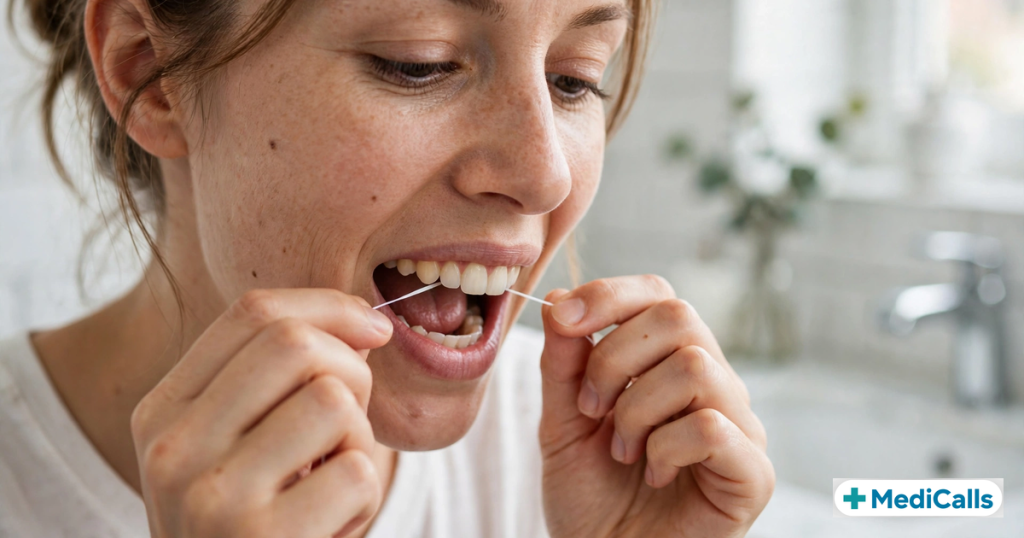
QUICK ANSWER: Rinse hard with water or mouthwash first, then work dental floss gently down and around each side of the gap — never stab straight in. An interdental brush or water flosser also works. Get to a dentist if it keeps happening in the same spot, hurts when you chew, or the gum bleeds for more than a day.
Why food gets trapped (and why it hurts so much)
Food wedges between teeth when there’s a small gap — an open contact between teeth, a slightly chipped filling, a gum that’s pulled back a little, or just two teeth that don’t sit perfectly tight. Meat fibres, popcorn hulls, seeds, and coconut slivers are the usual suspects: they slide into the gap when you chew and then swell or hook in so they won’t slide back out. The stuck piece presses on the gum, and the gum swells around it, which makes the gap feel even tighter.
Most of the time this is a minor annoyance you can fix in a few minutes. It becomes a dental problem when the same spot keeps trapping food (that points to a damaged filling or decay), or when you attack the gap with sharp objects and injure the gum.
Get it out — step by step
Step 1: Swish hard with water first
Fill your mouth with a big gulp of warm water and swish forcefully for 20–30 seconds, pushing the water through the sore gap. Repeat 2–3 times. This alone dislodges looser pieces. Mouthwash works too — the alcohol-free kind if your gum is already tender.
Step 2: Floss properly — down, curve, up
Take about 45 cm of dental floss. Wrap most of it around your middle fingers, leaving a couple of centimetres between your index fingers. Ease the floss down between the two teeth slowly — don’t snap it straight onto the gum. Then curve it into a C-shape around one tooth and slide it up and down a few times, then do the same around the neighbouring tooth. The C-shape hugs the tooth and sweeps the trapped food out instead of just shoving it deeper.
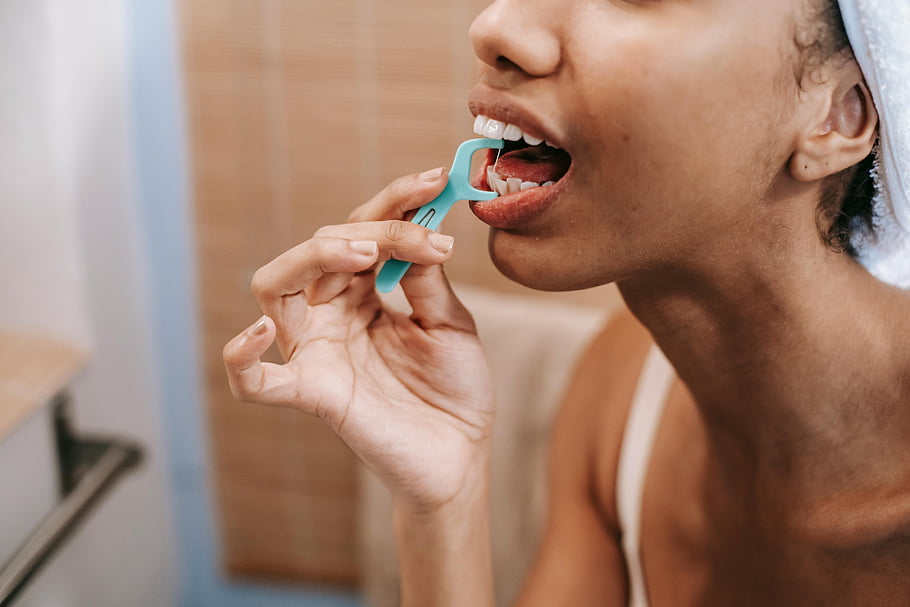
Step 3: Try an interdental brush if floss fails
Interdental brushes (tiny bottle-brush-like brushes sold at pharmacies) are brilliant for wider gaps. Pick the size that slides in with gentle resistance — never force a thick one. Push it gently through the gap once or twice. This works especially well for popcorn hulls, which floss sometimes slides past.
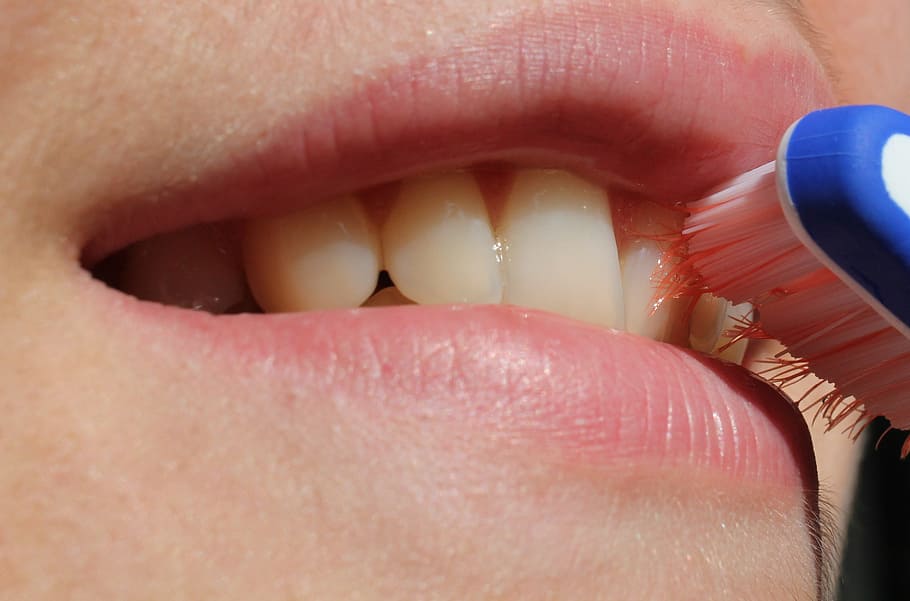
Step 4: Brush with fluoride toothpaste
Once the piece is out, brush the area gently with fluoride toothpaste. This cleans away the bacteria that multiplied under the trapped food — the source of the bad taste and the throbbing. Follow with a warm salt-water rinse (half a teaspoon of salt in a glass of warm water) to soothe the gum.

Step 5: Watch the spot for a day
The gum will feel sore for a few hours — that’s normal. If the swelling and tenderness fade by the next day, you’re done. If the gum stays puffy, bleeds when you brush, or you feel something still stuck, don’t keep digging — see below.
What NOT to do
- Don’t use a toothpick, needle, pin, or matchstick. Hard sharp objects scratch the gum, can push the food deeper, and can chip the tooth enamel or damage an existing filling.
- Don’t snap floss straight down onto the gum. It cuts the gum and causes bleeding that makes the whole situation worse.
- Don’t ignore food that traps in the same spot repeatedly. That’s a sign of a damaged filling, a cavity between the teeth, or a gum pocket — not a flossing problem.
- Don’t use tweezers or metal picks. Anything metal near the gum line risks real injury; leave instrument-style tools to the dentist.
See a dentist if:
- Food keeps getting stuck in the exact same spot — you likely need a filling repaired or a check for decay between the teeth.
- The gum bleeds for more than a day after you removed the food.
- You feel sharp pain when chewing on that side, or the area stays swollen after 2–3 days.
- You can’t get the piece out after 24 hours of trying, or you think you’ve pushed something deeper.
- You notice a bad smell or taste that doesn’t go away after brushing — trapped debris under the gum can turn into an infection.
FAQs
Can I just leave the food there until it dissolves?
No — most foods don’t dissolve fast enough. Bacteria feed on it within hours, producing acid that attacks the tooth and smell that won’t brush away easily. Remove it the same day.
My gum is still sore a day after removing the food. Is that normal?
Mild tenderness for a day is normal, especially if you flossed aggressively. Warm salt-water rinses help. If it’s still painful or puffy after 2–3 days, see a dentist.
Does a water flosser work better than string floss for this?
For rinsing loose debris, yes — a water flosser’s stream is excellent at flushing gaps. For wedged-in fibres, the C-shaped string-floss technique usually grips better. Using both is the most effective combination.
This guide is for information only and is not medical advice.