QUICK ANSWER: Sit or lie down immediately — do not try to “push through” it. Lie flat and raise your legs about 30 cm (or sit with your head between your knees), loosen tight clothing, get cool air, sip water slowly, and stay down for at least 10–15 minutes after the feeling passes.
That grey, tunnel-vision, ears-ringing feeling is your body’s warning that blood flow to the brain has briefly dropped. Fainting itself is usually over in seconds, but the fall it causes is not — most fainting injuries come from hitting the ground or nearby furniture. Your one job right now: get low, get safe, and let the episode pass. This guide walks you through exactly what to do in the next few minutes.
Step 1: Get down NOW — don’t fight it
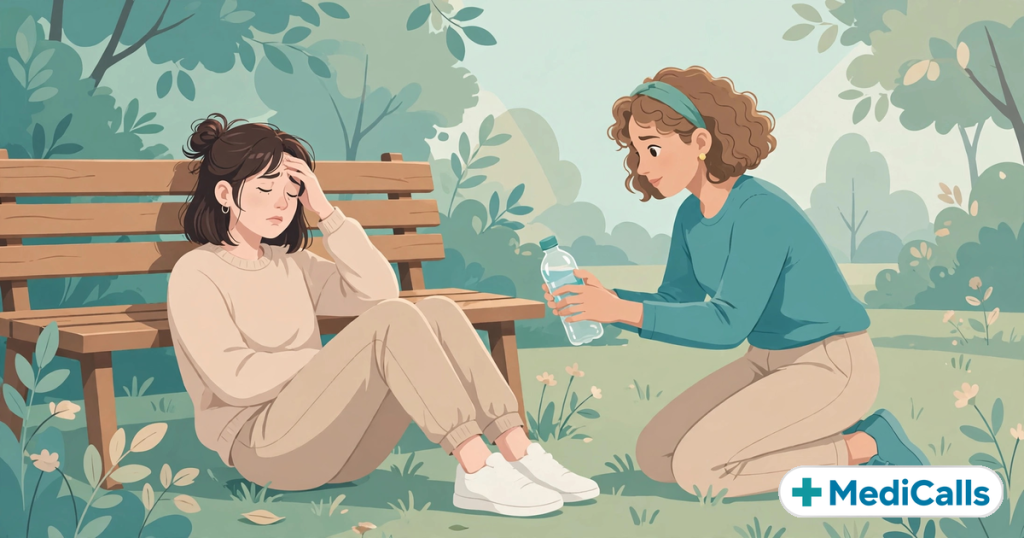
The moment you feel lightheaded, sit down on the floor or lie down wherever you are. A chair, a bench, a patch of grass — anything below standing height works. Trying to “shake it off” and stay on your feet is exactly how people collapse and crack their head on a counter or pavement.
If someone near you looks pale, sweaty, and wobbly, guide them down gently before they drop on their own.
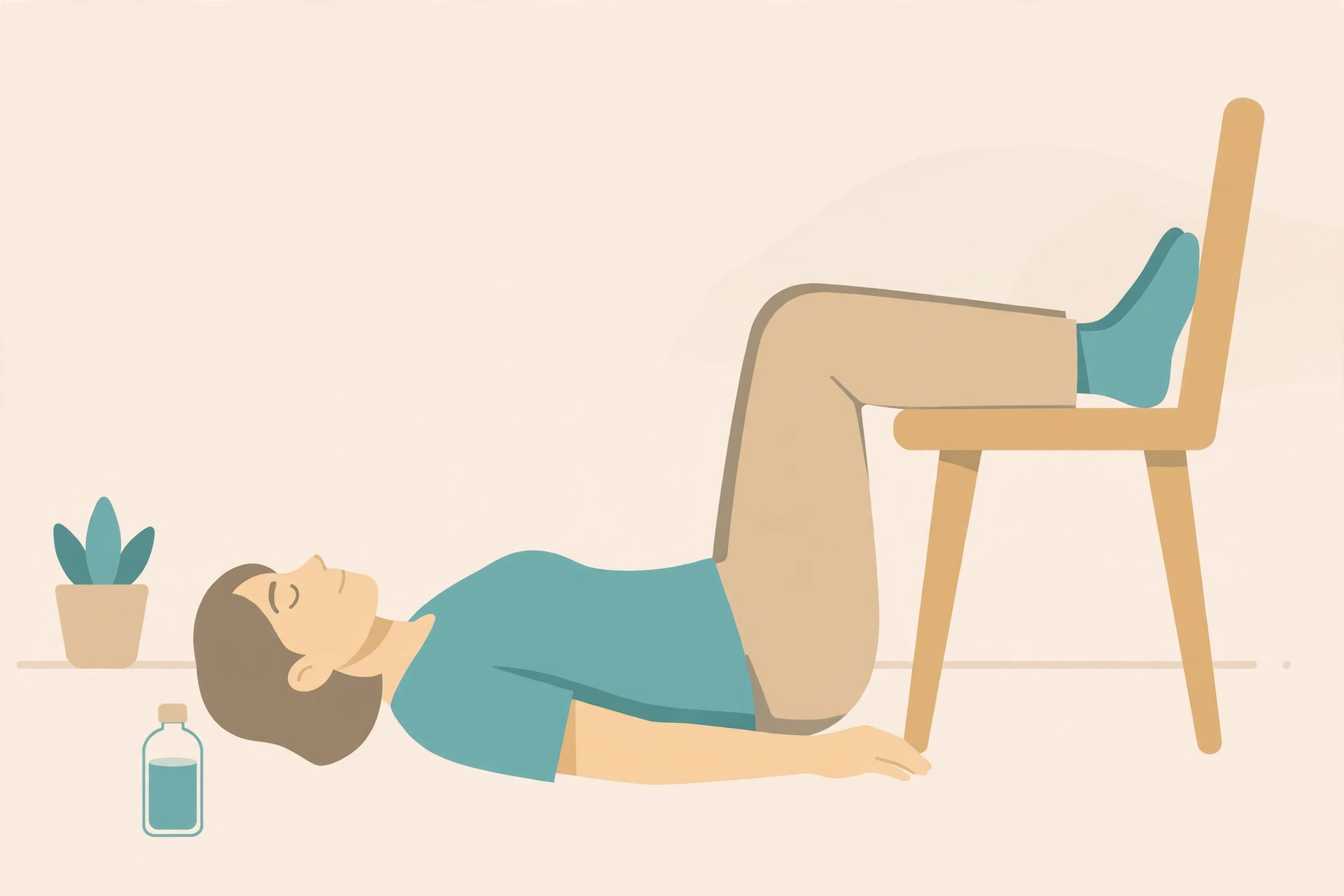
Step 2: Lie flat and raise your legs
If there is room, lie on your back and prop your feet up on a bag, a chair seat, or against a wall — roughly 30 cm (about a foot) higher than your heart. Gravity then helps blood flow back toward the brain, which is the fastest way to clear the dizziness.
No space to lie down? Sit with your head lowered between your knees instead. Both positions do the same job: they stop your heart from fighting gravity.
Step 3: Loosen anything tight
Undo a tight collar, belt, tie, scarf, or waistband. Tight clothing around the neck or waist can slow blood returning to the heart, which is the opposite of what you need right now. One less restriction makes a real difference.
Step 4: Get cool air
Heat, stuffy rooms, and crowds are classic fainting triggers. Move into shade or a cooler spot, open a window, or fan yourself with whatever is handy. If you are indoors, step outside or into an air-conditioned room. Cooler air helps your blood vessels recover their normal tone faster.
Step 5: Sip water — slowly
Take small sips of cool water once the worst of the dizziness passes. Dehydration and low blood volume are behind a large share of fainting episodes, and rehydrating is the simplest fix.
If you skipped a meal and feel shaky as well as dizzy, a few sips of juice or a sweetened drink is reasonable. But if you have diabetes, follow your own usual management plan rather than guessing — and never give food or drink to someone who is unconscious or still confused, because of the choking risk. Wait until they are fully alert.

Step 6: Stay down for 10–15 minutes after you feel normal
This is the step everyone skips — and the reason people faint twice in one day. The moment the dizziness fades, blood pressure still needs time to stabilise. Sit up slowly, pause for a minute, then stand up slowly. If any dizziness returns, lie back down and restart the clock.
Eat something light and keep drinking water over the next hour. Your body just sent a clear signal — give it time to recover.
What NOT to do
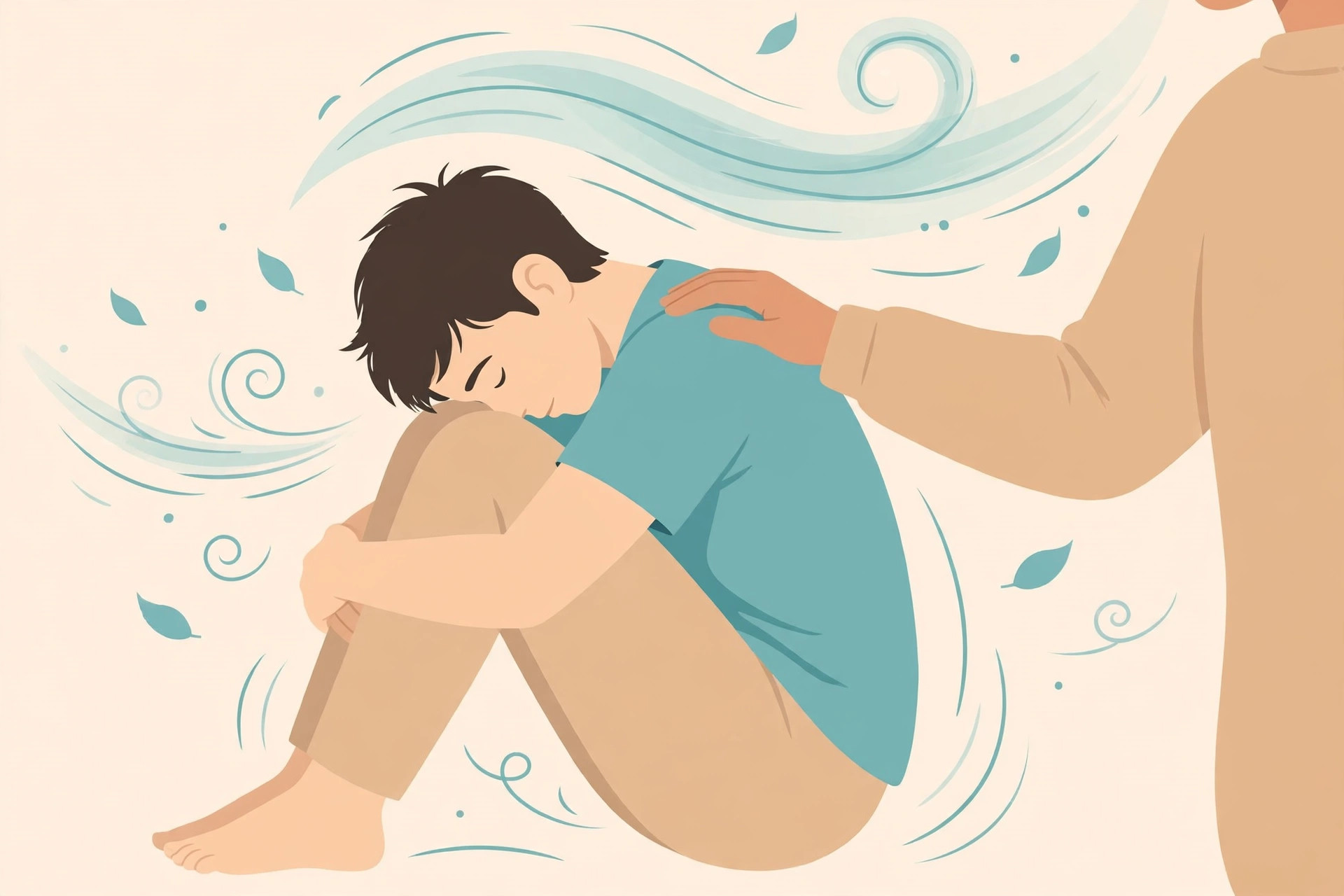
- Do not try to keep standing or “walk it off.” You will fall, and the fall is what injures people — not the faint.
- Do not slap someone’s face or splash ice water on them to “wake them up.” A person who fainted will come around on their own within a minute, lying flat. Let them.
- Do not give food or water to someone who is unconscious or confused. Choking risk. Wait until they are fully alert and sitting up.
- Do not drive yourself anywhere right after a faint, even if you feel fine. Get a ride or wait it out.
- Do not crowd around a person who fainted. They need cool air and space, not ten worried faces leaning over them.
Seek urgent medical care if:
- You fainted with no warning signs at all — a sudden collapse
- You had chest pain, a pounding or racing heartbeat, or a very slow pulse before or after fainting
- You fainted during exercise or physical exertion
- You hit your head hard in the fall, or the fall caused a deep cut or a possible fracture
- You are pregnant and fainted
- Fainting keeps happening — more than once in a short period
- You have a known heart condition or diabetes and you fainted
- Someone stays unconscious for more than a minute, turns blue, or has jerking movements that look like a seizure
FAQs
Why do people faint?
Most fainting is a vasovagal response: stress, heat, dehydration, standing too long, or even the sight of blood briefly drops heart rate and blood pressure, reducing blood flow to the brain. The brain essentially reboots — you go limp and horizontal, which restores blood flow, and you wake up within seconds to a minute. Noticing your own triggers (heat, hunger, long queues) helps you prevent the next one.
Is fainting dangerous by itself?
The faint itself is usually brief and harmless — the danger is the fall, and whatever underlying issue caused it. That is why getting down fast matters more than anything else. Fainting during exercise, with chest symptoms, or repeatedly is different: that deserves a medical check.
Can I drive after fainting?
Not right away. Wait until you feel completely normal, have eaten and drunk something, and ideally have someone with you. If you fainted without any warning, or fainting keeps happening, talk to a doctor before driving again — unexplained fainting can affect driving fitness.
This guide is for information only and is not medical advice.