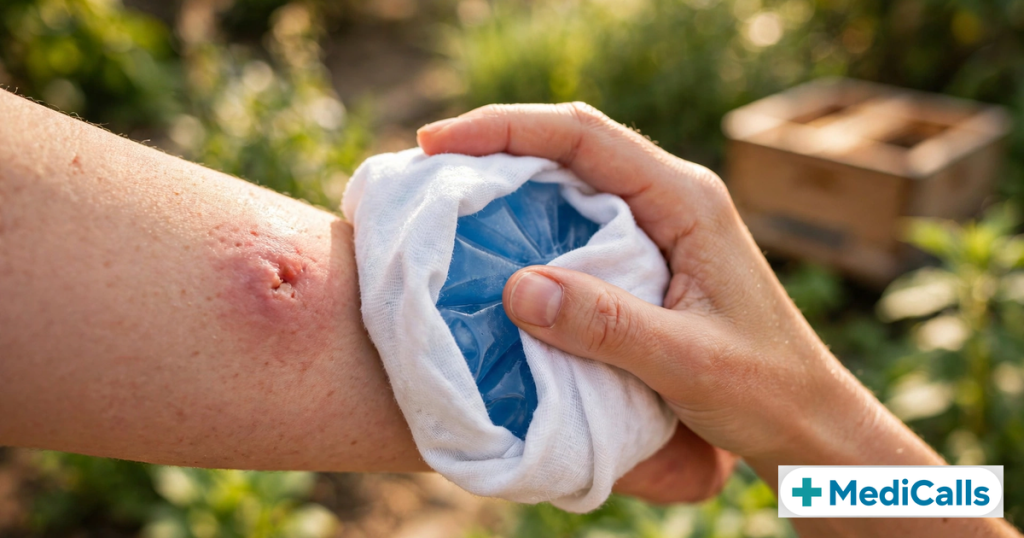
QUICK ANSWER: Get away from the insect, scrape out the stinger if you see one (don’t squeeze it), wash the spot with soap and water, apply a cold pack for 10 minutes, take a standard antihistamine (follow pack directions) if it itches, and watch for warning signs of a serious allergy for the next 30–60 minutes.
A bee or wasp sting always arrives at the worst moment — a picnic, a walk in the park, a barefoot step in the garden. The pain is sharp and immediate, and panic makes everything worse. The good news: for most people, a sting is painful but manageable with fast, simple steps. This guide walks you through exactly what to do in the first hour, and — just as important — what NOT to do.
Step 1: Move away calmly
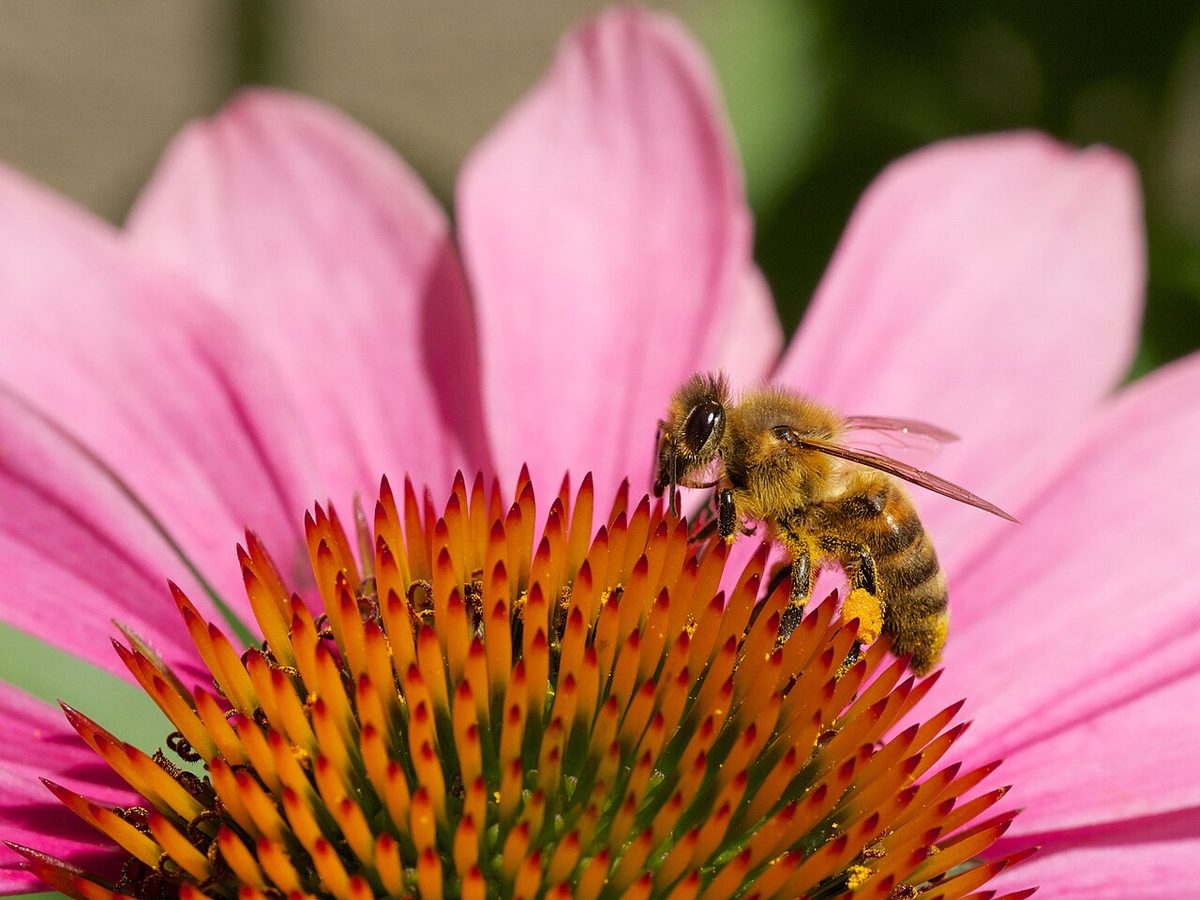
Walk briskly away from the area where you were stung. Bees release an alarm chemical when they sting, which can attract more bees. Wasps can sting multiple times, so standing still near a nest is risky.
Do not swat wildly at the insect or flap your arms — sudden movements can trigger more stings. Just move away in a calm, straight line and find a safe spot.
Step 2: Remove the stinger — scrape, don’t squeeze
Look at the sting site. If a bee stung you, there is often a tiny dark stinger left in the skin. Wasps usually do not leave a stinger behind.
Scrape it out sideways with a fingernail, a credit card, or the edge of a knife. The key rule: do not pinch or squeeze the stinger with tweezers or your fingers. The stinger has a small venom sac attached to it, and squeezing pushes more venom into your skin. Scraping removes it cleanly in seconds.
Step 3: Wash the area with soap and water
Run cool water over the sting and wash gently with plain soap, then pat dry. This removes dirt and surface venom, and it lowers the small risk of infection.
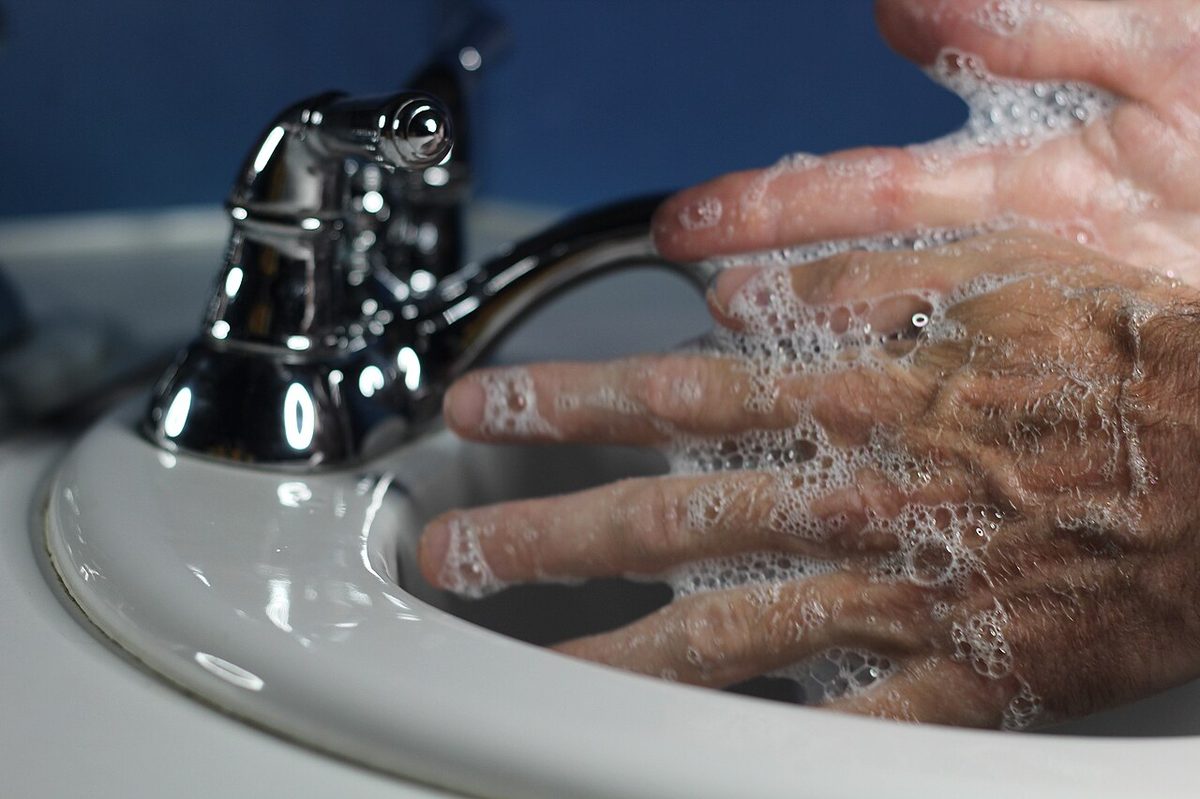
Avoid very hot water — heat increases swelling. Cool or lukewarm water is right. If you are outdoors with no tap nearby, a wet wipe or bottled water works as a temporary substitute; wash properly once you are home.
Step 4: Apply a cold pack for 10 minutes
Wrap a few ice cubes, a gel cold pack, or even a cold water bottle in a thin cloth and press it on the sting for 10 minutes. Remove it for 10 minutes, then repeat if the swelling or throbbing continues.
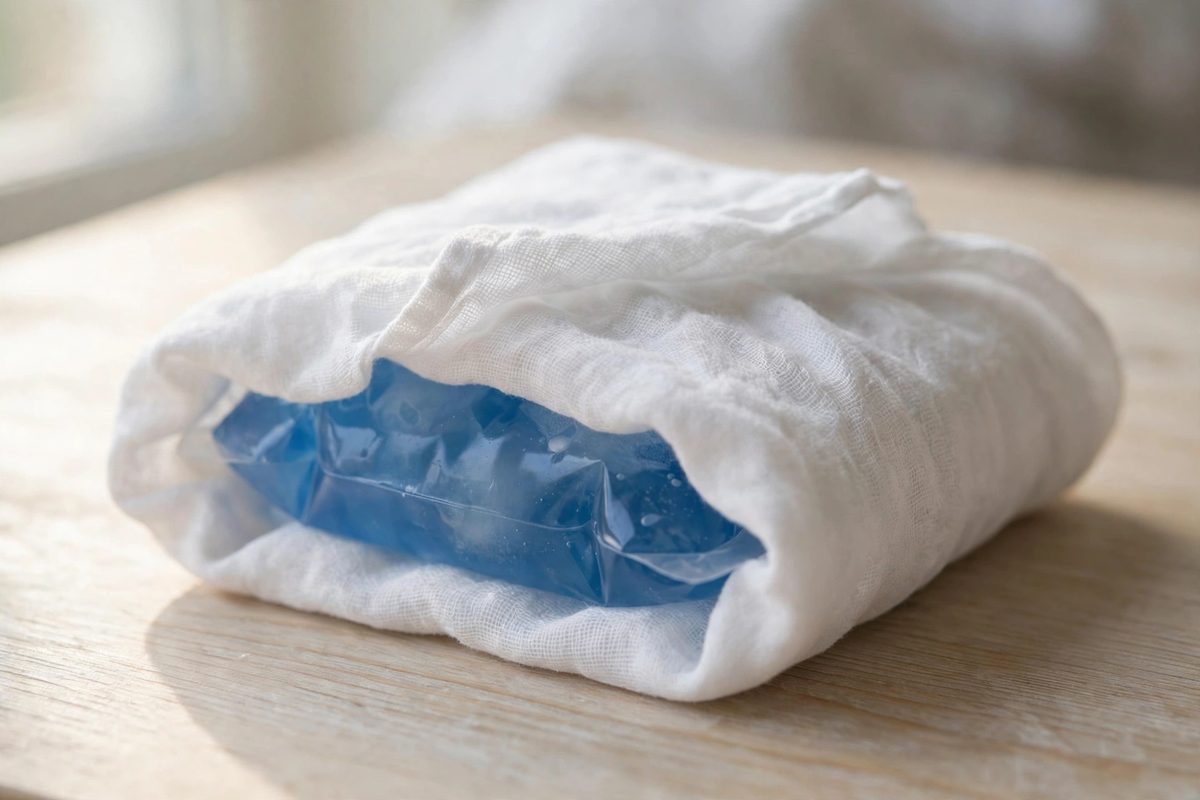
Cold slows the spread of venom, numbs the pain, and reduces swelling. Never put ice directly on bare skin — the cloth barrier prevents an ice burn on top of your sting.
Step 5: Take a standard antihistamine if it itches
If the area starts itching, burning, or swelling, a standard over-the-counter antihistamine (such as cetirizine or loratadine) can help. Follow the pack directions exactly — one tablet is enough for most adults.
Do not take more hoping for faster relief. Antihistamines calm the allergic reaction your body mounts against the venom; they need time, usually 30–60 minutes, to work.
Step 6: Raise the sting site and keep it clean
If the sting is on your arm or leg, prop the limb up on a pillow or cushion. Elevation reduces swelling, the same way it does for a sprained ankle.
Keep the area clean and uncovered. Watch it over the next day or two: mild redness and swelling that spreads a few centimetres is normal and should peak within 24–48 hours, then fade.
What NOT to do
- Do not scratch the sting. Scratching pushes bacteria into the tiny puncture wound and can turn a simple sting into an infection. If it itches, press the cold pack on it instead.
- Do not squeeze the stinger out with tweezers. As above — squeezing the venom sac pumps more venom in. Scrape it off sideways.
- Do not apply mud, toothpaste, raw onion, or “drawing” remedies. These home tricks are unproven, and mud especially can introduce bacteria into the puncture. Soap, water, and cold are the proven approach.
- Do not cover the sting with a tight bandage. The area needs air and room to swell slightly. A tight wrap increases throbbing pain.
- Do not ignore a sting in or near the mouth or throat. Even one sting inside the mouth can swell the airway. Get emergency help immediately — do not wait to see if it gets worse.
Seek urgent medical care if:
- You have trouble breathing, wheezing, or a tight feeling in the throat
- Your lips, tongue, or face start swelling
- You feel dizzy, faint, nauseous, or your skin breaks out in hives away from the sting site
- Your heartbeat feels fast or irregular
- You know you are allergic to bee or wasp stings and were stung again
- A child was stung multiple times, or was stung inside the mouth or on the neck
These are signs of a severe allergic reaction (anaphylaxis). Call emergency services immediately — this is the one situation where waiting is dangerous. If you carry an epinephrine auto-injector and have been trained to use it, use it.
FAQs
How long does bee sting pain last?
The sharp pain usually fades within 1–2 hours. Swelling and redness typically peak at 24–48 hours and then gradually settle over 3–7 days. If swelling keeps growing after two days, or the area becomes hot, streaked, or pus-filled, see a doctor — that suggests infection, not venom.
Do bee stings get worse if I’ve been stung before?
Each person’s immune response varies, but repeated stings can trigger a stronger reaction in some people. That is why watching for allergy signs for 30–60 minutes after every sting matters, even if your last sting was mild.
Is it true the stinger keeps pumping venom after the bee leaves?
Yes — the stinger and its venom sac can keep pulsing for up to a minute after the bee is gone. That is exactly why scraping it out quickly, without squeezing, is the single most important step.
This guide is for information only and is not medical advice.