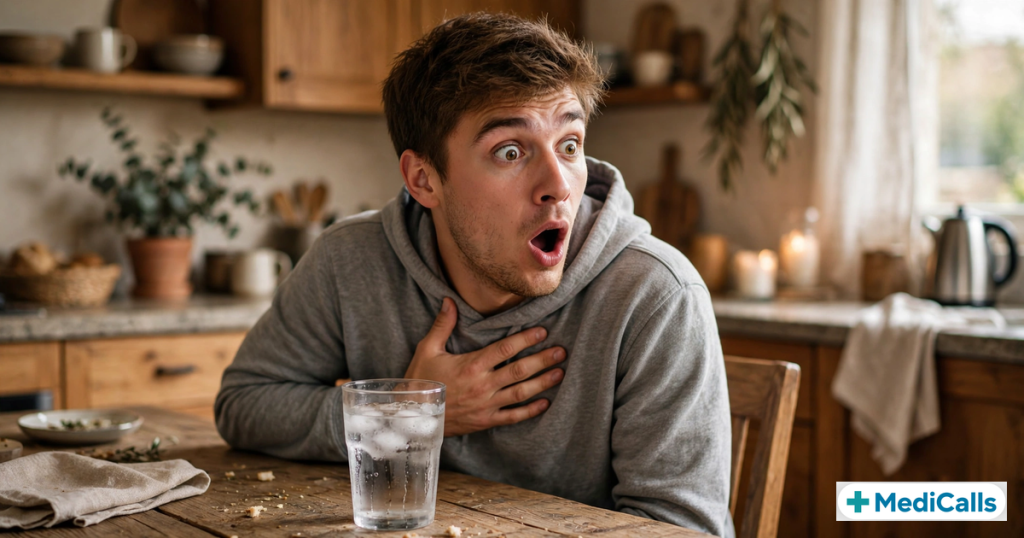
QUICK ANSWER: Hiccups usually stop on their own, but you can speed things up — sip very cold water quickly, hold your breath for 20 seconds, breathe slowly into a paper bag for a minute, press gently on your diaphragm, or swallow a spoon of honey or sugar. Stay calm and avoid gulping air. Seek medical care if hiccups last more than 48 hours or come with chest pain, severe heartburn, or difficulty swallowing.
Hiccups strike at the worst moments — in the middle of dinner, during an important call, or late at night when everyone else is asleep. That sudden “hic” is your diaphragm muscle spasming and your vocal cords snapping shut. Most bouts are harmless and end within a few minutes, but when they won’t stop, they get annoying fast. Here is what to do right now to end them.
Step 1: Sit down and stay calm
Hiccups get worse when you are stressed, laughing hard, or rushing. Sit comfortably, relax your shoulders, and take one slow, deep breath. Tell yourself this is temporary — most hiccups stop within 5–10 minutes even without any remedy. A calm body relaxes the diaphragm faster.

Step 2: Drink very cold water quickly
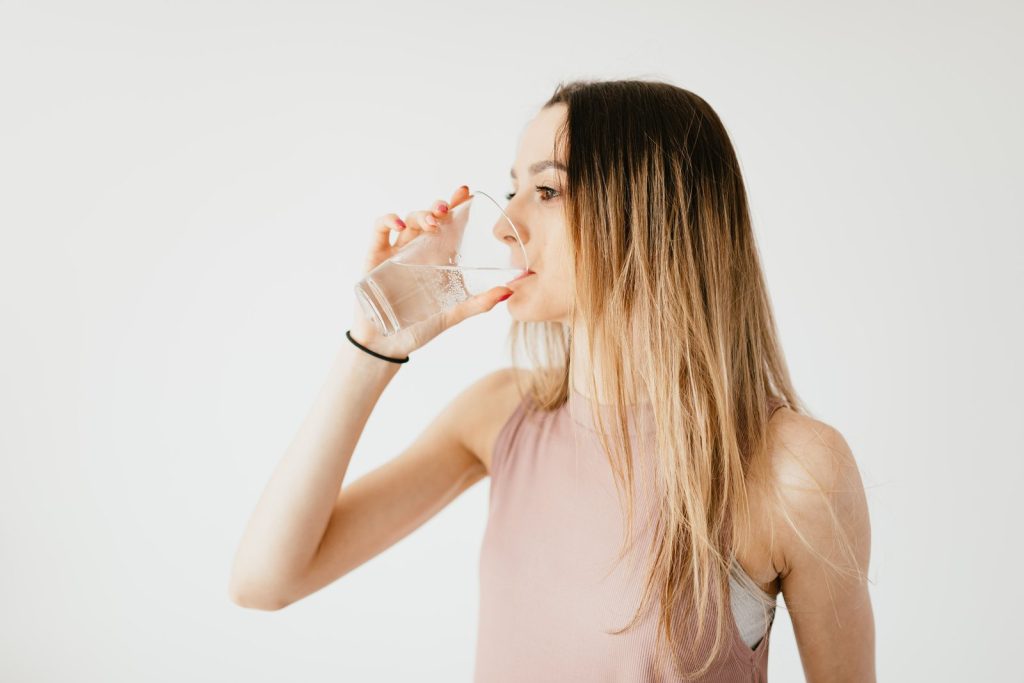
Fill a glass with very cold water and drink it in steady, continuous gulps without pausing to breathe. The cold temperature and the swallowing action stimulate the vagus nerve, which helps reset the hiccup reflex.
No cold water? Room-temperature water works too, but cold is better. If you can, bend slightly forward while drinking — the change in posture adds gentle pressure on the diaphragm.
Step 3: Hold your breath for 20 seconds
Take a deep breath in, hold it for about 20 seconds, then breathe out slowly. You can also do a gentler version: breathe in, hold for 10 seconds, then swallow twice without letting the breath out, then exhale slowly.
Holding your breath raises carbon dioxide levels in your blood, which often interrupts the diaphragm spasm cycle. Repeat up to three times with short breaks between attempts.
Step 4: Breathe slowly into a paper bag
Place a small paper bag (a lunch bag, not a plastic one) loosely over your mouth and nose. Breathe in and out slowly for about a minute, then remove the bag.
This is the same carbon-dioxide principle as holding your breath, but gentler and more sustained. Never use a plastic bag, and never hold it tightly over your face — you need loose airflow, not a seal.
Step 5: Apply gentle pressure under your ribs
Place your fingers just below your breastbone, where your ribs meet, and press in gently but firmly for a minute or two. This area sits right above the diaphragm. Gentle pressure here can interrupt the spasm.
Alternatively, pull your knees up to your chest and lean forward for a minute — this compresses the diaphragm from below and often stops a stubborn bout.
Step 6: Swallow something sweet or sour
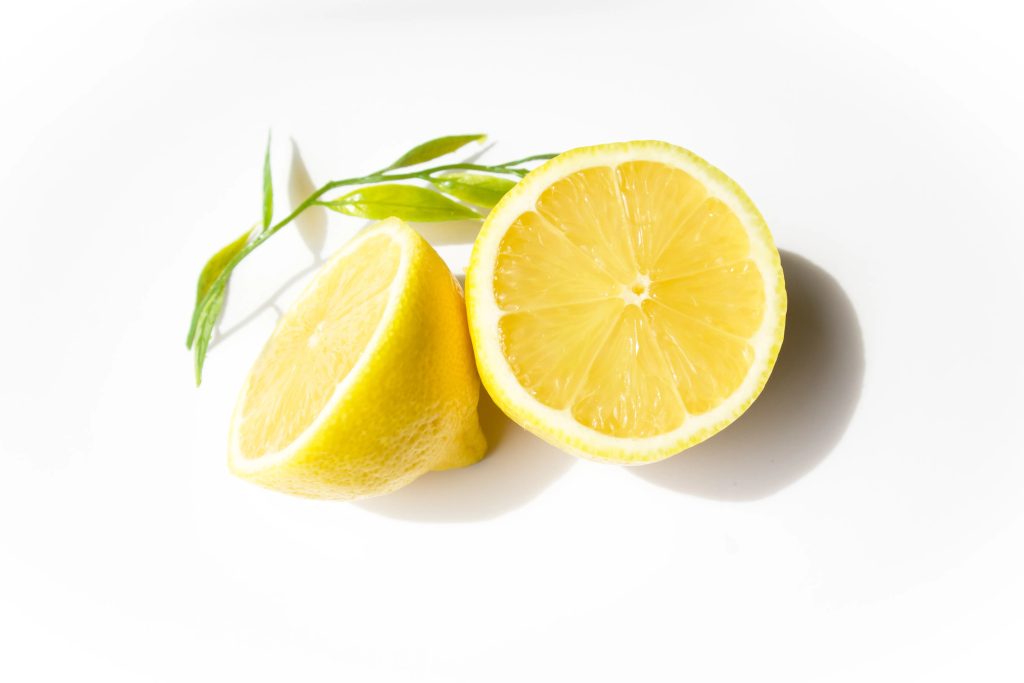
Swallow a teaspoon of honey, a spoonful of sugar, or a small slice of lemon. The strong taste overstimulates the nerves in your mouth and throat, which can override the hiccup signal.
Suck on an ice cube or bite into a lemon wedge for the same effect. These tricks sound odd, but they work because the hiccup reflex is easily “distracted” by strong sensory input.
What NOT to do
- Do not get startled on purpose. Being scared may sometimes stop hiccups, but the adrenaline surge can raise your heart rate and make them worse. It is not a reliable or safe method.
- Do not gulp fizzy drinks or eat too fast while hiccuping. Swallowing more air makes the diaphragm spasm harder, not better. Slow down everything you put in your mouth.
- Do not drink alcohol to “relax” the hiccups. Alcohol is one of the common triggers of hiccups in the first place — it can prolong the bout.
- Do not keep trying breath-holding if you feel dizzy. If holding your breath makes you lightheaded, stop immediately and breathe normally. Forcing it can make you faint.
- Do not try to vomit. Some old remedies suggest making yourself sick to stop hiccups. This is unsafe and unnecessary.
Seek medical care if:
- Hiccups continue for more than 48 hours without stopping
- They keep coming back over several days or weeks
- You have chest pain, trouble breathing, or a racing heartbeat along with the hiccups
- You have severe heartburn, difficulty swallowing, or vomit blood
- The hiccups interfere with eating or sleeping for more than a day
Very persistent hiccups can occasionally signal irritation of the nerves near the stomach or oesophagus, reflux, or other conditions a doctor should check. This is uncommon, but the 48-hour rule is a good line to remember.
FAQs
Why do I get hiccups after eating?
Eating too fast, overeating, drinking fizzy beverages, or eating very spicy food can all irritate the diaphragm or trap air in the stomach — the two main triggers. Slow down, take smaller bites, and skip the fizzy drinks to prevent the next bout.
Are hiccups dangerous for the heart?
Ordinary short bouts are harmless. If you have a heart condition and experience hiccups together with chest pain, dizziness, or breathlessness, treat it as urgent and seek care — but the hiccups themselves are not damaging your heart.
How long can hiccups normally last?
Most bouts end within a few minutes to a couple of hours. Hiccups lasting more than 48 hours are called persistent hiccups, and those lasting more than a month are called intractable — both need a doctor’s attention.
This guide is for information only and is not medical advice.