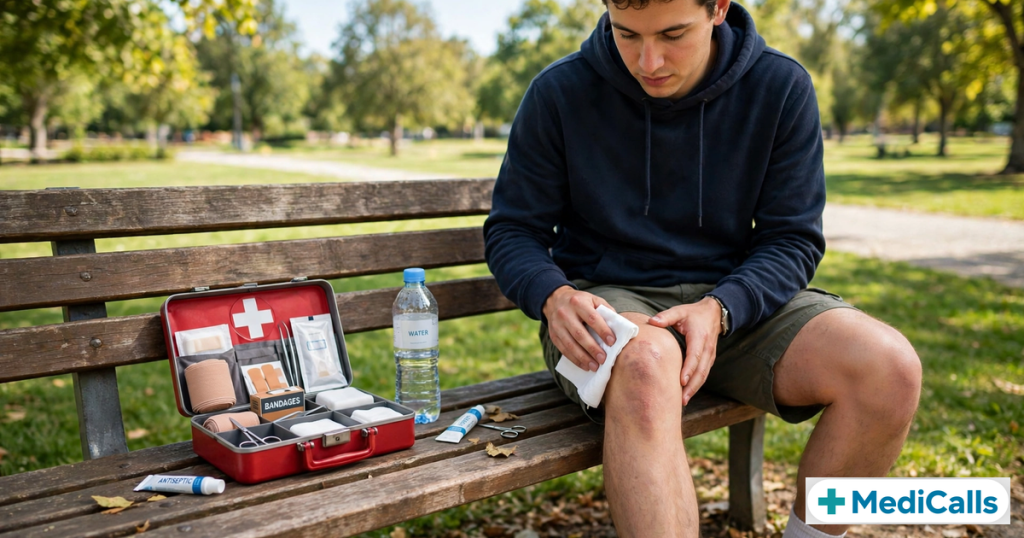
Quick answer
QUICK ANSWER: Sit down, rinse the scrape under clean running water, wash gently around it with soap, pat it dry, apply petroleum jelly, and cover it with a clean bandage. Most scrapes heal well with this routine — what matters most is washing out dirt quickly, before infection starts.
A scraped knee — road rash from a fall off a bike or a trip on the pavement — looks dramatic, but it is usually shallow: only the top layer of skin is grazed off, leaving a raw, red, stinging patch. It hurts out of proportion to its size because the skin’s nerve endings are exposed. With clean, simple care it usually closes within a week or two. The main risks are trapped dirt, which can cause infection, and a dressing that sticks to the wound.
Step 1: Sit down and check how bad it is
Sit somewhere safe and look at the scrape. A typical scrape is shallow, red, and raw, with light bleeding that slows on its own within a few minutes. Press a clean cloth gently on it if it is bleeding.
If bleeding is heavy, spurting, or does not slow after 10 minutes of steady pressure, or if you can see fat, muscle, or bone, or the joint looks bent at a strange angle, skip the rest of this guide and get urgent medical care.
Step 2: Rinse it under clean running water
Hold the knee under clean, lukewarm running water for several minutes and let it flush away dust and gravel. Outdoors, pour clean drinking water over it from a bottle. Rinse patiently — this step does more to prevent infection than any cream. Do not scrub the raw surface hard.
Step 3: Wash around the scrape with soap
With clean hands, wash the skin around the scrape with mild soap and water. Let soapy water run over it, but do not rub soap into the raw area or use hydrogen peroxide, rubbing alcohol, or harsh antiseptics — these sting and slow healing.
If grit is stuck in the scrape, rinse again with more water rather than digging at it with dirty fingers. If it will not come out, a doctor or pharmacist can remove it safely.
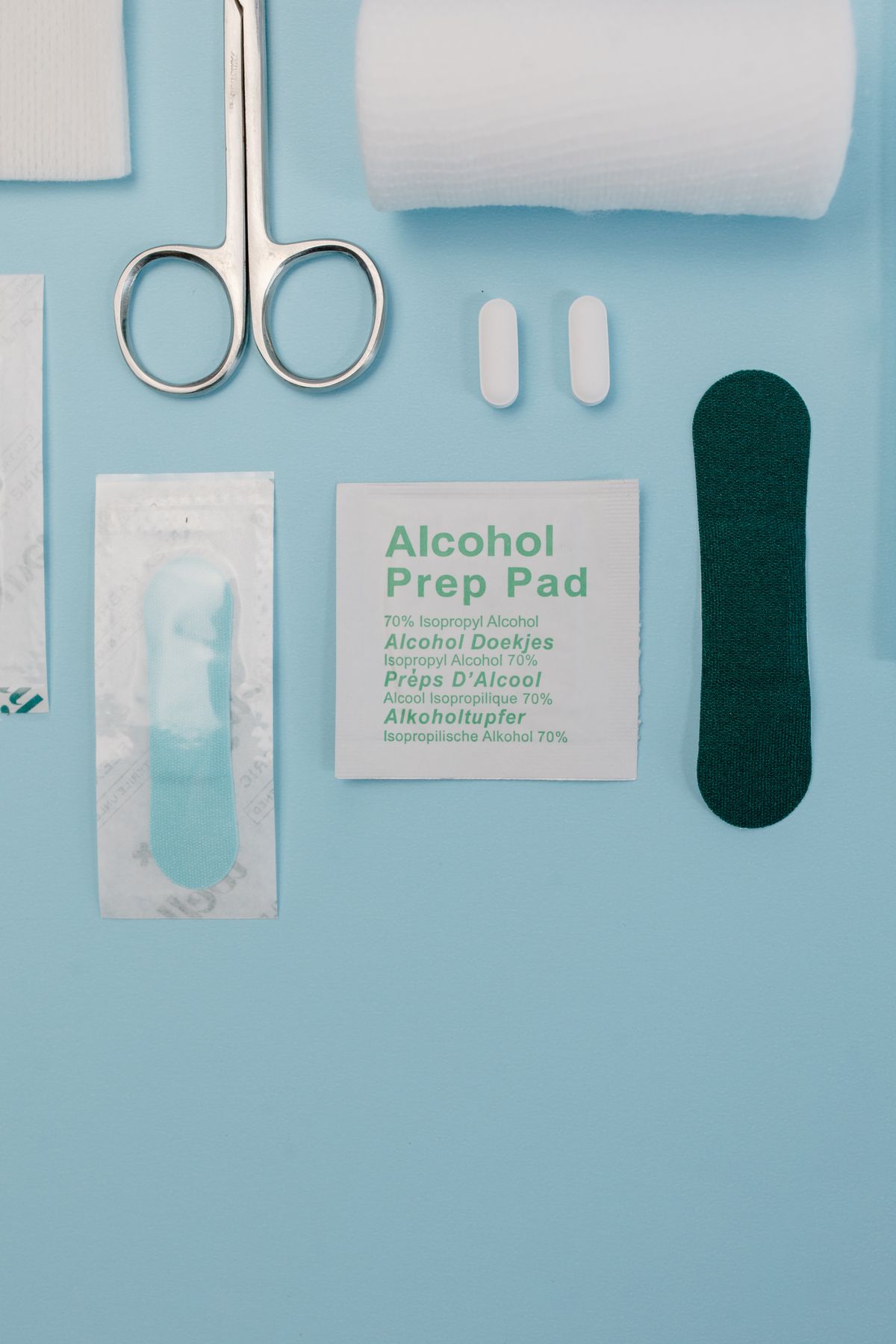
Step 4: Pat dry, add petroleum jelly, and cover it
Pat it dry gently with a clean towel or gauze — do not rub, or you will tear new skin and restart bleeding. A little clear oozing is normal. Spread a thin layer of plain petroleum jelly over it: this keeps the wound moist, helps it heal with less scarring, and stops the bandage sticking. You do not need antibiotic ointment for a routine scrape. Cover it with a clean, non-stick dressing or large adhesive bandage — flexible, so it stays put when you bend the knee, but loose enough to slip a finger underneath. Change it daily, or sooner if it gets wet or dirty.
Step 5: Watch it heal over the next few days
In the first day or two, mild soreness, slight redness at the edges, and a thin scab are normal. Once a scab has formed and the area is dry, you can leave it uncovered at home, but keep it covered outdoors. Avoid baths, pools, or ponds until it has fully closed; a quick shower is fine after the first day if you pat it dry and redress it. Bend the knee gently so it does not stiffen, as long as movement does not tear the scab open.
What NOT to do
- Do not use hydrogen peroxide, rubbing alcohol, or strong antiseptic on the scrape.
- Do not scrub it, pick the scab, or peel off a stuck dressing by force — soak it off instead.
- Do not leave dirt or gravel in it, or wrap the knee so tightly that your foot tingles or changes colour.
- Do not apply toothpaste, turmeric, or home pastes to an open scrape.
See a doctor / seek urgent care if:
- Bleeding is heavy, spurting, or does not stop after 10 minutes of steady pressure.
- The scrape is very deep or large, you can see fat, muscle, or bone, or dirt will not rinse out.
- The area becomes increasingly red, swollen, warm, or painful after the first day, or red streaks spread from it.
- You develop a fever, or pus or a bad smell comes from the wound.
- You cannot bend or bear weight on the knee, or the joint looks deformed.
- Your tetanus vaccination is not up to date, the scrape came from a rusty object, or it is on the face or in a person with diabetes or a weak immune system.
These signs need same-day medical attention.
FAQs
Should I let a scraped knee air out or keep it covered?
Cover it for the first few days while it is raw — a moist, covered wound heals faster and scars less. Once a scab has formed, you can leave it uncovered at home, but cover it again outdoors.
How long does a scraped knee take to heal?
A shallow scrape usually scabs within a day or two and heals within one to two weeks. Deeper scrapes, or ones that keep cracking when you bend the knee, take a little longer.
Will a scraped knee leave a scar?
Most shallow scrapes heal without a lasting scar if dirt is cleaned out quickly and the scab is not picked. Keeping it moist with petroleum jelly and out of strong sun also helps.
This guide is for information only and is not medical advice.