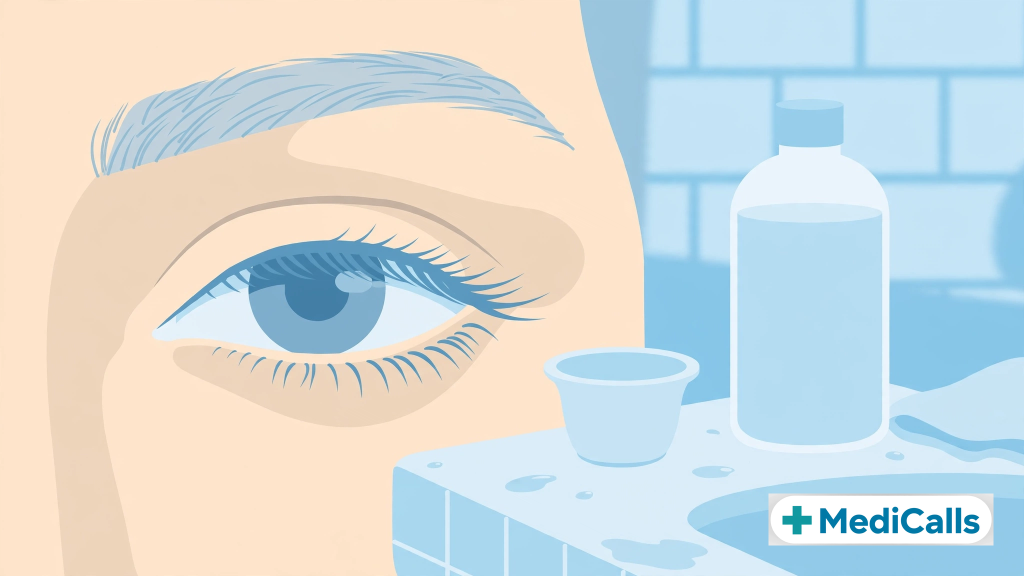
QUICK ANSWER: Don’t rub — blinking in clean water or flushing with a gentle stream of lukewarm water removes most particles. If it’s a chemical splash or something embedded in the eye, skip home removal and get medical help immediately.
Step 1: Don’t rub — freeze your hands
Your first instinct will be to rub. Don’t. Rubbing grinds the particle against your cornea and can scratch it, turning a 5-minute problem into a painful week. Consciously keep your hands away from the eye.
Step 2: Blink it out in water
Fill a clean bowl or cup with lukewarm clean water. Open your eye underwater and blink several times. The water plus blinking washes out dust, eyelashes, and small particles surprisingly well. Alternatively, stand in the shower and let lukewarm water run gently over your forehead into the eye.
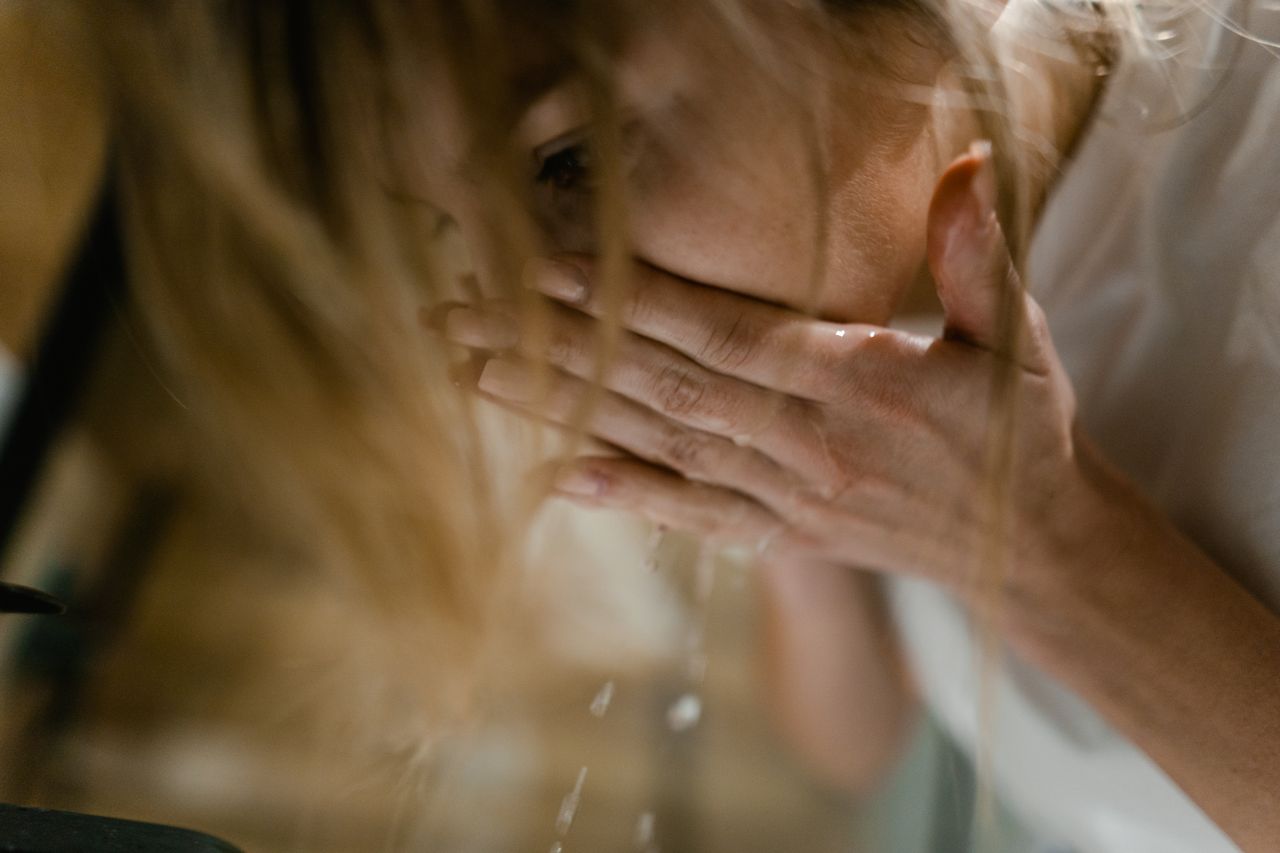
Step 3: Try the upper-lid trick
If blinking didn’t work, the particle may be trapped under your upper eyelid. Look down, gently pull your upper lid down over your lower lid, and blink. Your lower lashes can sweep the particle off the inner surface of the upper lid.
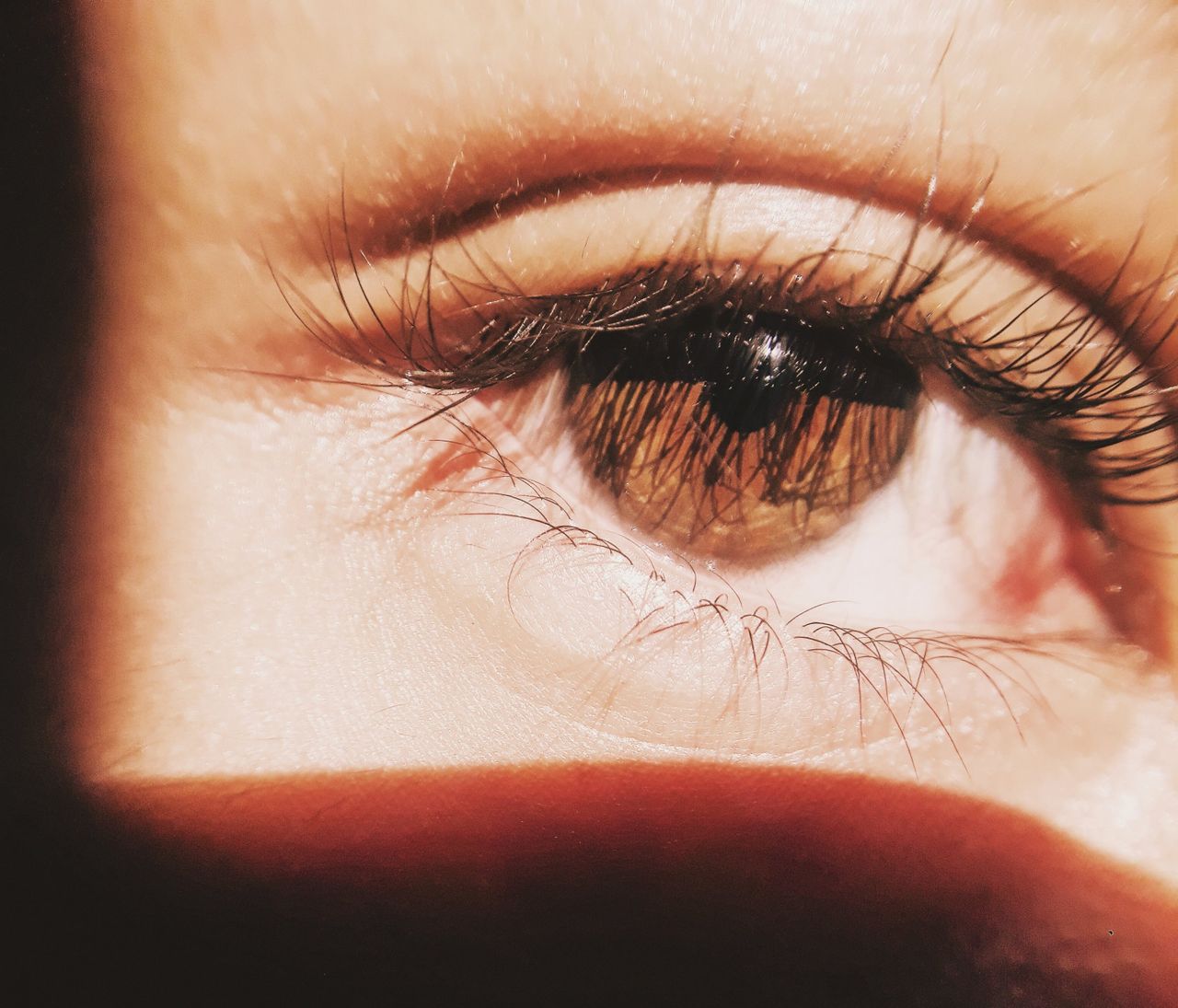
Step 4: Check in the mirror
In good light, gently pull down your lower lid and look up — particles often sit there, visible and easy to flush. For the upper lid, this is harder to check alone; if you suspect something’s still under there, move to Step 5.
Step 5: Flush once more, then stop and assess
Give one more gentle water flush. If the eye now feels normal, you’re done — mild redness for an hour or two is fine. If it still feels like something is there, or vision is blurry, stop trying. Repeated attempts irritate the eye further.
Step 6: Aftercare
Don’t wear contact lenses until the eye feels completely normal (at least a few hours). If the eye is mildly red, a cool damp cloth over the closed eye soothes it. Avoid eye drops unless they’re plain lubricating drops.

What NOT to do
- Do not rub your eye — the number one rule, worth repeating.
- Do not use tweezers, cotton buds, toothpicks, or any tool inside your eye.
- Do not try to remove something that’s embedded or stuck — or a metal fragment (especially after grinding/hammering work).
- Do not flush with anything other than clean water or sterile saline — no soap, no “eye wash” home recipes.
- Do not keep contact lenses in while trying to flush — remove them first (unless a chemical splash, where every second counts: flush first, remove lenses during flushing).
See a doctor / seek urgent care if:
- A chemical splashed in your eye (acids, alkalis, cleaners, cement) — flush with water for at least 20 minutes continuously AND get emergency help; bring the chemical’s container if possible
- Something is embedded in the eye or stuck on the cornea
- Metal fragment, especially after metalwork — these can rust on the eye within hours
- Vision is blurred, doubled, or you see halos after the particle is out
- Severe pain, extreme light sensitivity, or the eye won’t open
- The “something in there” feeling persists beyond 24 hours
FAQs
My eye feels scratchy even after the particle came out — is that normal? Yes, mild scratchiness for a few hours is common — the surface was irritated. If it’s still there tomorrow, get it checked; you may have a small corneal abrasion.
Can I use my contact lens solution to flush? Sterile saline or multipurpose solution is fine for flushing. Never use tap water with contact lenses in other contexts, but for emergency flushing of a particle, clean tap water is acceptable.
How do I prevent this at work? Safety glasses or goggles for grinding, hammering, woodworking, gardening (mowing especially), and chemical handling. Most serious eye injuries are preventable with a ₹200 pair of glasses.
This guide is for information only and is not medical advice. If you are unsure, contact a doctor or your local health helpline.