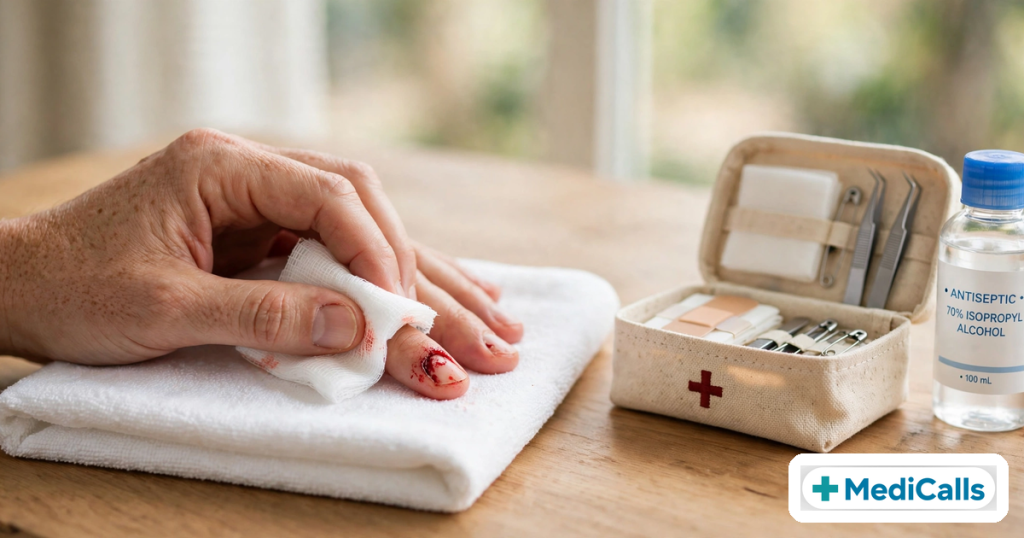
Quick Answer: Press firmly with clean gauze for 10–15 minutes, rinse gently, then cover with a snug bandage. Do not rip the torn piece off.
A torn nail — caught on a drawer, bent back during sport, or snagged on fabric — bleeds more than you would expect and hurts out of proportion to its size. The good news: most torn nails stop bleeding quickly with simple pressure, and they rarely need a hospital visit. The key is to stay calm, protect the nail bed, and resist the urge to tear the loose piece away.
Follow these steps in order, and you should have the bleeding under control within about 15 minutes.
What to Do Right Now — Step by Step
Step 1: Stop and sit down. Sit somewhere comfortable and hold the injured hand up slightly, at about heart level. This slows the bleeding and keeps you from bumping the nail again. Take a slow breath — a torn nail looks dramatic, but it is usually a minor injury.
Step 2: Press with clean gauze or cloth. Place a piece of clean gauze, a cotton pad, or a clean cloth over the nail and press firmly. Keep steady pressure for a full 10–15 minutes without peeking every minute — lifting the pad early breaks the clot and restarts the bleeding. If blood soaks through, add another layer on top rather than removing the first one.
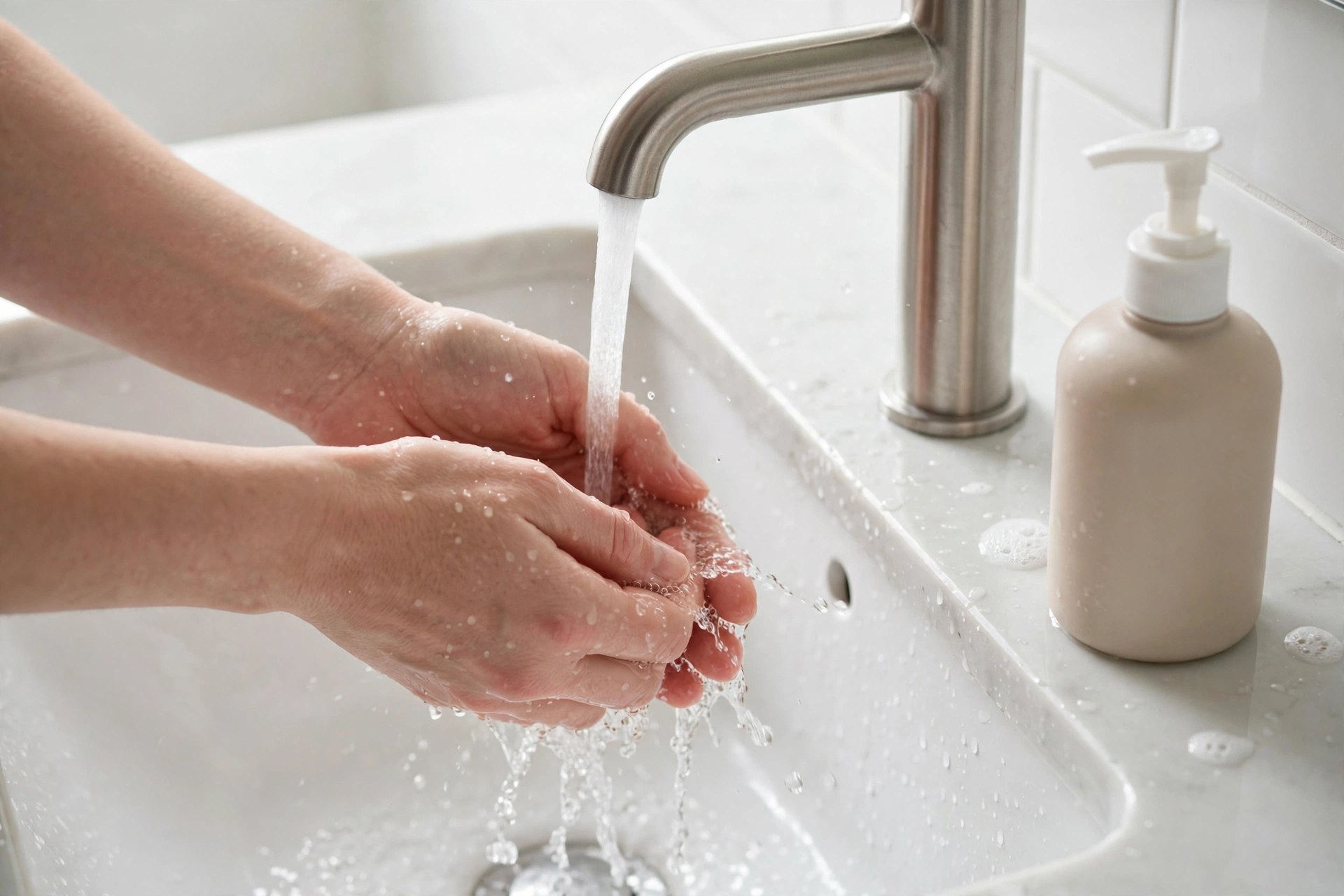
Step 3: Rinse gently once the bleeding slows. When the bleeding has eased, rinse the finger under clean, lukewarm running water for a few seconds to wash away blood and dirt. Do not scrub the nail bed, and skip hydrogen peroxide or strong antiseptics — plain water and mild soap around (not inside) the wound are enough.
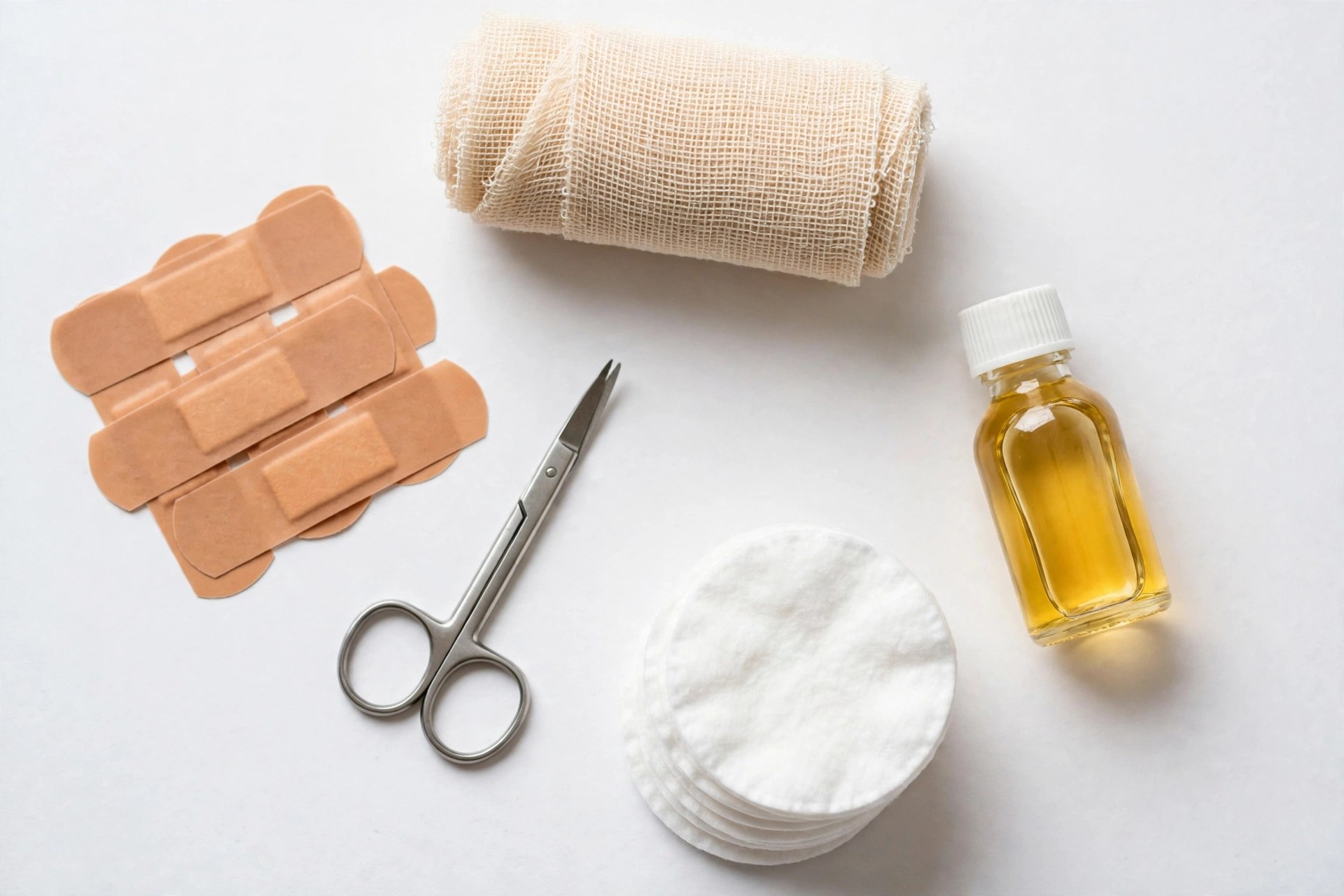
Step 4: Trim only the loose, hanging piece — carefully. If a flap of nail is hanging by a thread and catching on everything, you may trim just the detached part with clean, sharp nail scissors or clippers. Cut only what is already fully separated. Never pull, tear, or cut into nail that is still attached — that tears the nail bed and causes more pain and bleeding.
Step 5: Apply a thin layer of petroleum jelly and bandage it. Dab a small amount of petroleum jelly over the nail bed to keep the bandage from sticking, then wrap it snugly with a small adhesive bandage or a piece of gauze and medical tape. The bandage should feel firm but not tight — your fingertip should stay its normal colour and not throb, tingle, or go numb.
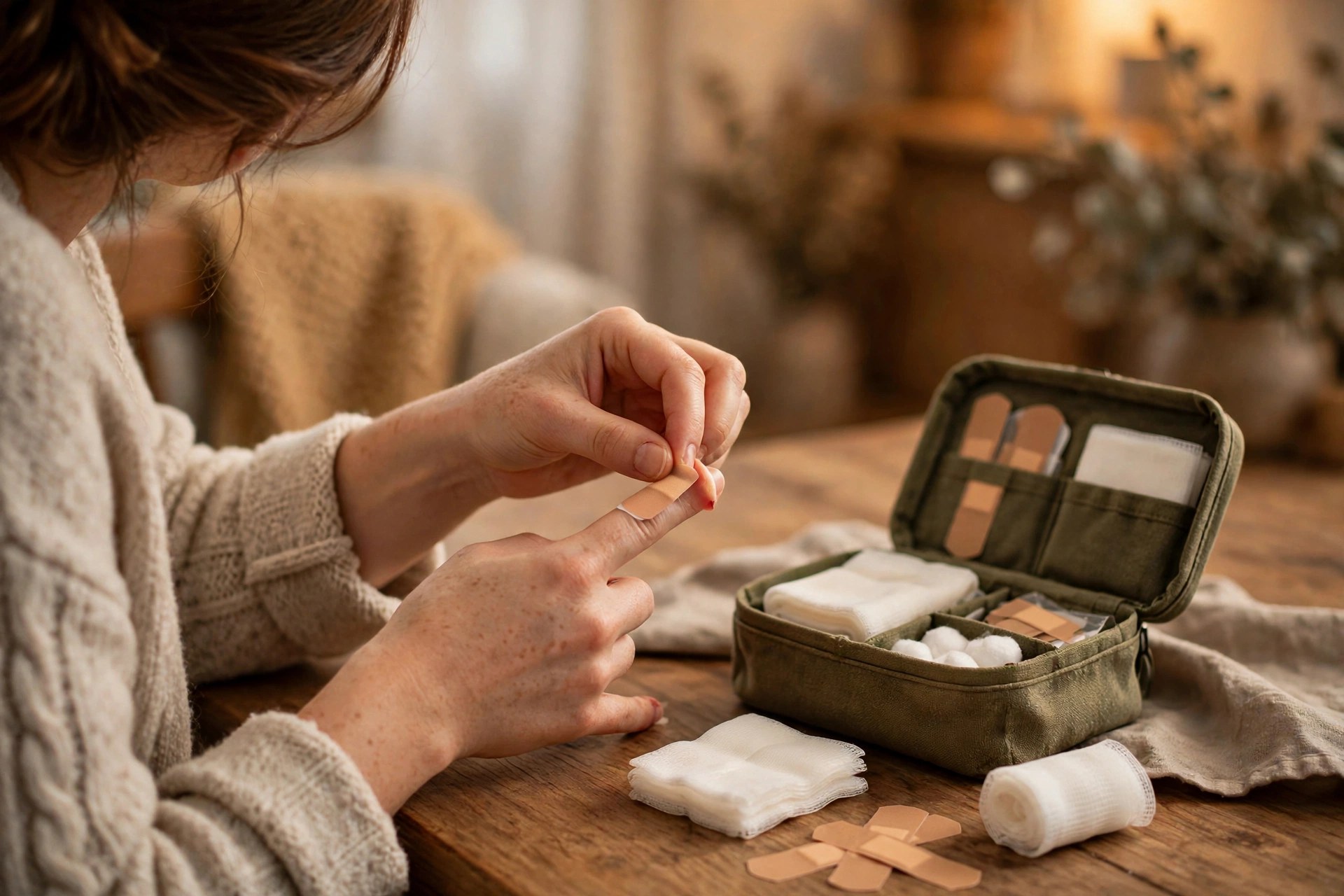
Step 6: Keep it clean and dry, and change the dressing daily. Change the bandage once a day, or sooner if it gets wet or dirty. Each time, rinse gently, pat dry, and re-apply petroleum jelly and a fresh bandage. Wear a glove for washing dishes or wet work until the nail bed has sealed over, usually within a few days.
Step 7: Watch it for the next few days. Mild soreness for a day or two is normal. The damaged nail will gradually grow out and be replaced over the coming weeks to months, depending on whether it is a fingernail or toenail. Protect the finger from further knocks while it heals.
What NOT to Do
- Do not rip or yank the torn nail off. Pulling tears the sensitive nail bed, increases bleeding, and raises the risk of infection.
- Do not use superglue to “fix” the nail. Household glue is not sterile, can trap bacteria, and can cause a painful skin reaction.
- Do not wrap the bandage so tightly that the finger changes colour. A blue, pale, or numb fingertip means the dressing is too tight — redo it looser at once.
- Do not soak the finger in peroxide, alcohol, or harsh antiseptics. These irritate the raw nail bed and slow healing.
- Do not bite or chew the torn edge. Mouth bacteria are a fast route to infection.
- Do not ignore a nail that was crushed rather than torn. A heavy crush injury (for example, slammed in a door) is a different situation and may need medical review.
See a Doctor / Seek Urgent Care If:
- Bleeding does not stop after 20 minutes of firm, continuous pressure.
- The nail has come off completely, or the nail bed is deeply cut or exposed.
- The finger is bent at an odd angle, badly swollen, or you cannot move it — a fracture may be involved.
- You notice spreading redness, increasing pain, warmth, swelling, pus, or red streaks up the finger after a day or two.
- You have diabetes, poor circulation, or a weakened immune system — even small hand wounds deserve earlier review.
- Your tetanus vaccination is not up to date and the injury involved dirt or a rusty object.
FAQs
Will the torn nail grow back?
Yes, in most cases. A fingernail regrows in about 4–6 months and a toenail in up to 12 months. The new nail may look slightly ridged or uneven at first and usually smooths out as it grows.
Can I paint over a torn nail or use a fake nail?
Wait until the nail bed has fully sealed and there is no open or raw area — usually at least a week. Covering a raw nail bed traps moisture and bacteria and can cause infection.
Should I take a painkiller?
For mild pain, a standard over-the-counter pain reliever such as paracetamol or ibuprofen, taken exactly as directed on the pack, is usually enough. If pain worsens instead of easing after a day or two, get the finger checked.
This guide is for information only and is not medical advice.