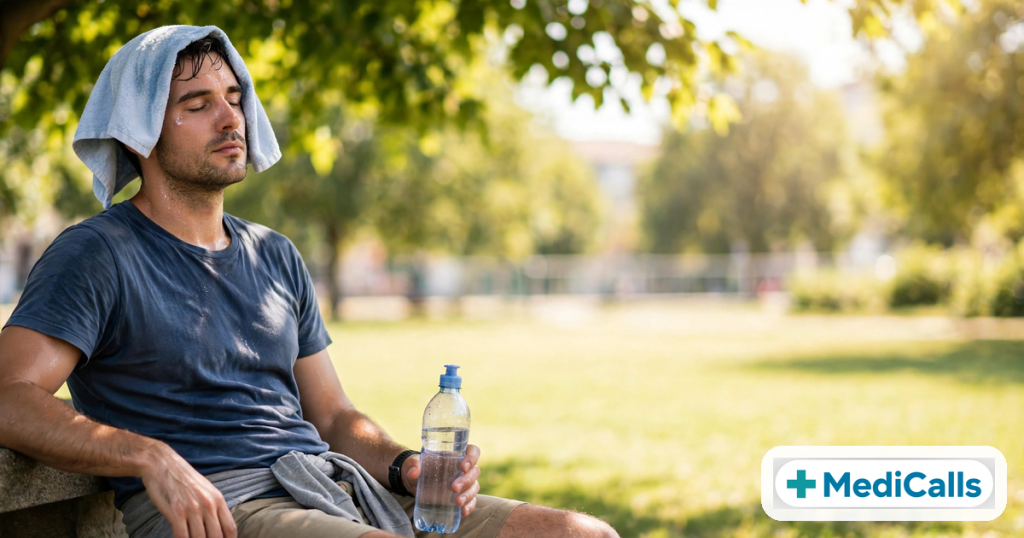
QUICK ANSWER: Get out of the heat at once, lie down in the shade or a cool room, loosen tight clothing, sip cool water slowly, and cool your skin with a damp cloth. Do not keep working, exercising, or walking in the sun — heat exhaustion can turn into heatstroke if you ignore it.
You have been out in strong heat, and suddenly you feel dizzy, sweaty, sick, or unusually tired, with a fast heartbeat or headache. That combination is often heat exhaustion: your body is struggling to cool itself after losing too much water and salt through sweat. It is common in hot weather, during outdoor work, walks, sports, or travel in a hot vehicle. Caught early, it usually improves quickly with shade, rest, and fluids. Your job right now is simple: stop, cool down, and rehydrate — then watch for warning signs.
Step 1: Stop and get out of the heat immediately
Stop whatever you are doing and move to the coolest place nearby: indoors with a fan or air conditioning if possible, otherwise deep shade. Do not try to “push through” the last few minutes of a task. If someone else looks unwell in the heat, help them to shade and stay with them.
Step 2: Lie down and loosen your clothes
Lie down and raise your legs slightly on a bag or folded jacket, unless that feels uncomfortable. Loosen tight clothing, remove extra layers, and let air reach your skin. If you feel faint, stay lying down. Rest for at least 30 minutes, even if you feel better sooner — getting up too fast can bring the dizziness back.

Step 3: Sip cool fluids slowly — do not gulp
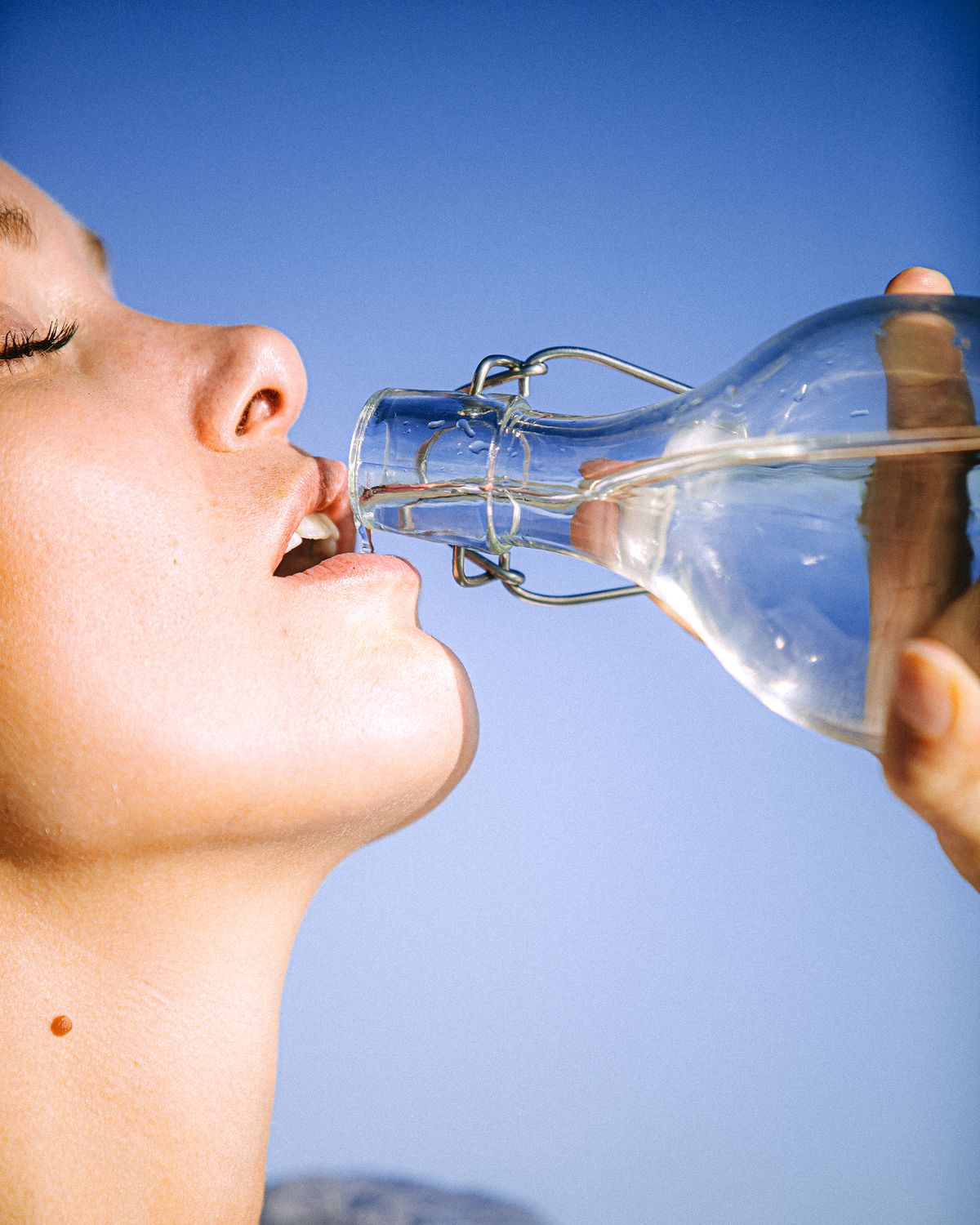
Take small, frequent sips of cool water. If you have been sweating heavily, an oral rehydration solution (ORS) or a sports drink can help replace lost salt as well as water — follow the pack directions. Aim for steady sips over the next hour, not a large amount at once. If the person is vomiting, pause fluids briefly and try very small sips once nausea eases. Do not give alcohol or very sugary drinks, and do not force someone confused or drowsy to drink.
Step 4: Cool your skin with water and air
Wet your skin to help it lose heat: place a cool, damp cloth on your forehead, neck, armpits, and groin, or sponge cool water over your arms and legs. Sit near a fan while damp — moving air speeds cooling. A cool shower also helps if you feel steady enough. Change the cloth often so it stays cool.
Step 5: Treat cramps gently if they start
Heat cramps — painful tightening after heavy sweating — often come with heat exhaustion. Rest the muscle, stretch it very gently, and sip fluids slowly. Do not return to hard activity until cramps have fully settled.
Step 6: Eat something light once you feel better
When nausea has passed, a light, slightly salty snack — a banana, a simple sandwich, or soup — can help you recover. Avoid a heavy, spicy meal straight away, keep drinking fluids for the rest of the day, and stay out of strong heat until tomorrow if you can.
What NOT to do
- Do not keep exercising, working, or walking in the sun to “finish the job”.
- Do not gulp a large amount of ice-cold water in one go, and do not drink alcohol.
- Do not wrap yourself in heavy blankets or stay in a hot, closed room.
- Do not take a painkiller to “treat” heat exhaustion — rest, shade, and fluids are the treatment.
- Do not drive yourself if you still feel dizzy, confused, or weak.
See a doctor / seek urgent care if:
- Vomiting continues, or you cannot keep fluids down.
- You feel confused, slur your speech, faint, or cannot stay awake.
- Your skin becomes hot and dry, and you have stopped sweating.
- Your body temperature is very high, or you have a seizure.
- Chest pain, severe headache, or difficulty breathing develops.
- Symptoms do not improve within an hour of cooling and drinking, or they keep getting worse.
These signs can mean heatstroke, a medical emergency — call emergency services at once and keep cooling the person while help arrives.
FAQs
What is the difference between heat exhaustion and heatstroke?
Heat exhaustion is your body struggling with heat and fluid loss, with heavy sweating, weakness, and nausea. Heatstroke is more serious: cooling fails, skin may become hot and dry, and confusion or fainting can occur. Exhaustion can turn into heatstroke, which is why early cooling matters.
How long does heat exhaustion take to recover?
Many people feel much better within an hour of shade, rest, and fluids, though tiredness may linger for a day. Avoid strong heat and hard activity for at least 24 hours, and see a doctor if you are not back to normal by then.
Can I prevent heat exhaustion next time?
Yes — drink water regularly before you feel thirsty, take breaks in the shade, wear light, loose clothing and a hat, and avoid heavy activity in the hottest part of the day. Take extra care if you are elderly, a young child, or have a heart condition.
This guide is for information only and is not medical advice.